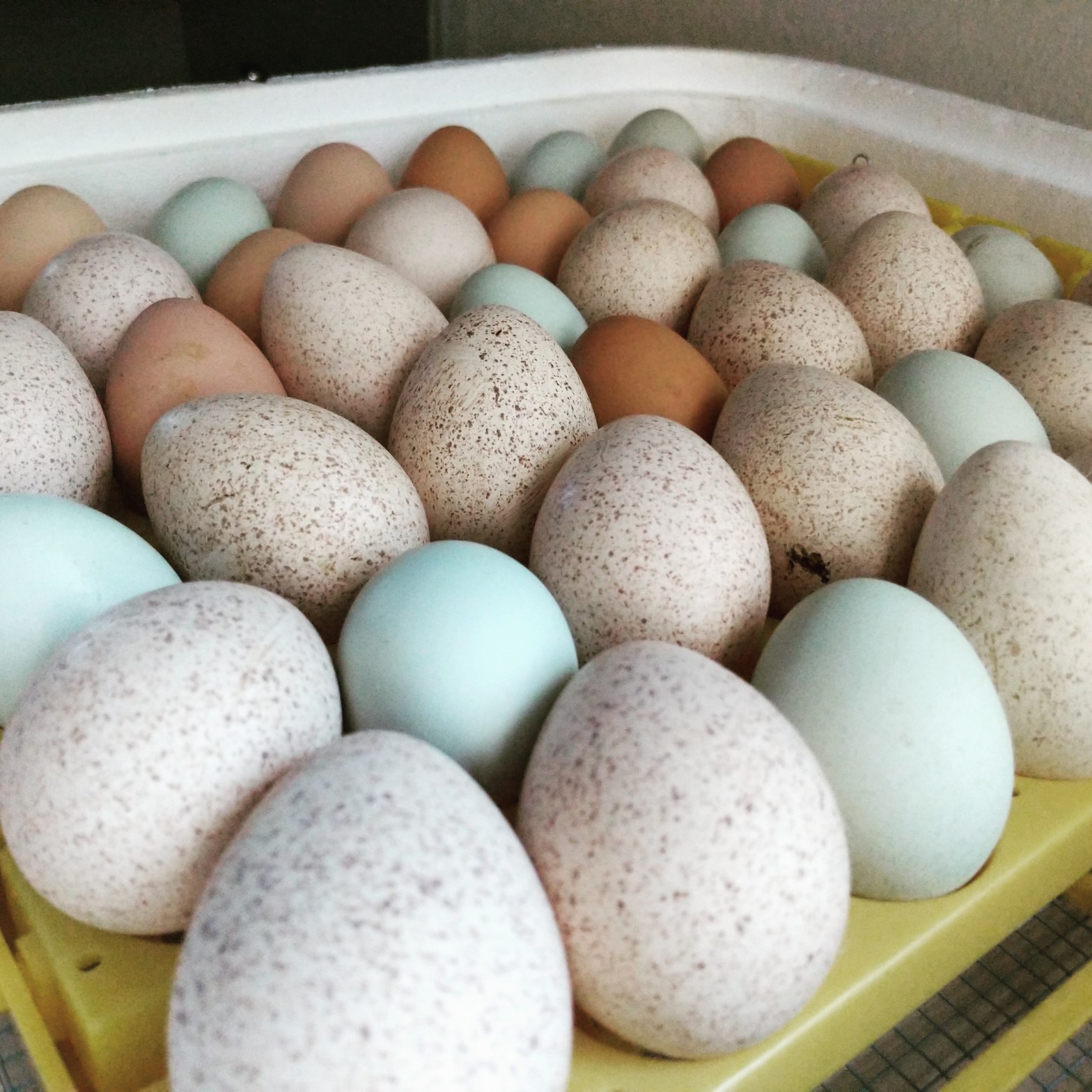
The flock at Big Branch Apiary has settled in and can finally be released to free range forage during the day. Makes for better eggs and happier hens (& cuts way down on the feed bill!)
How to slide through a war-zone roadblock
I remember a story about how a woman imprisoned in Auschwitz was thankful for the infestation of fleas. The infestation was so bad that it kept the guards out of the barracks and as such, made the women’s lives easier.
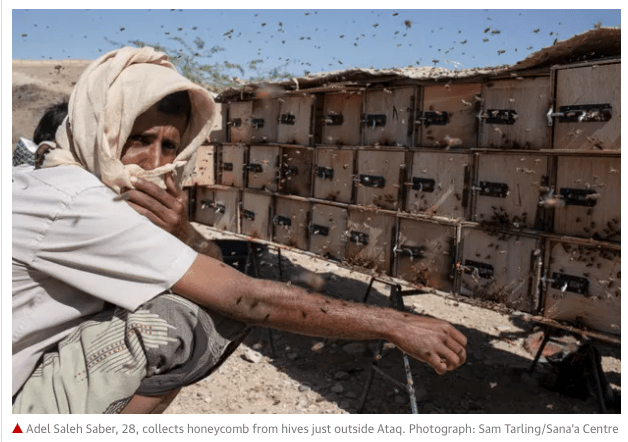
Check out this story from the Guradian’s Bethan McKernan about beekeepers in Yemen. Not only are they keeping bees without a suit–something I wouldn’t survive with my pissy girls–but they do it in a war-torn land of political upheaval. It has some parallels to the story of the fleas in Auschwitz.
I hope you enjoy it.
Big Daddy goes to Big Branch

The flock is slowly migrating from River Ridge to Big Branch. This week Big Daddy, by far the biggest rooster in the flock, got moved along with his hens.
Big Daddy is a Pearl Orpington. Orpingtons tend to be docile which is why he’s a lover, not a fighter. He was happy to find himself separated from the other roosters, who kept him separated from the lady birds when they shared the same run.
Here at the Apiary we’ve separated the flock: White Rock, Pearl Orpington, and Whiting True Blue. We also separated the turkeys from the smaller birds because Toms can be grumpy.
The hens lay eggs in a rainbow of colors. If you’re interested in fresh farm eggs we sell them for $2 a dz. Currently you can pick them up at 105 Hazel Dr, 70123 or at 61690 Bremerman Road, 70445. We deliver in a limited area ($5/dz). Contact us for more info: email at bigbranchapiary@gmail.com, via social media, or text/call 713-825-1003.

Thanksgiving reprieve
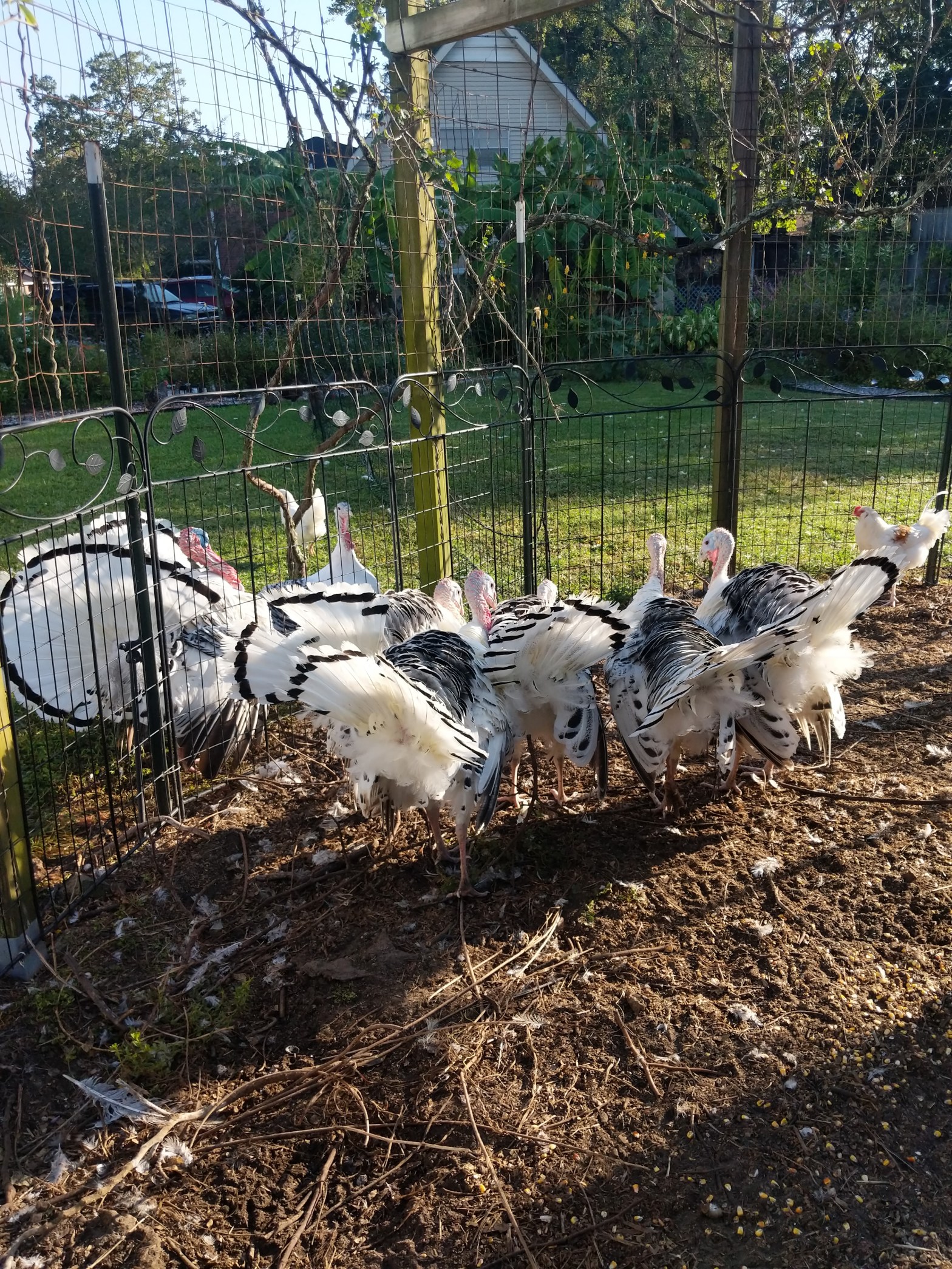
These young toms are always eager to parade.
Luck was on the side of these Royal Palm turkeys.
They may have been destined for Thanksgiving dinner, but then they found a home on Jacob King’s Donaldsonville farm. Jacob has a menagerie that includes goats, sheep, some pigs, chickens and even a pair of peacocks. He felt some Royal Palms would make an excellent addition.

Small in stature but large in attitude, Royal Palms are a heritage breed–kept for their beauty and generally considered as too small to be commercially profitable on a large scale. They weigh in at 10 pounds for hens and up to 16 pounds for toms. According to the Livestock Conservancy, the Palm was first seen in Florida in the 1930’s. They were recognized as a distinct breed in 1971.
Out turkey hens proved to be great mothers. Here at Big Branch Apiary we let our girls raise the chicks we hatched along with the poults. If you are incubating keep in mind that turkeys hatch after 28 days and chickens after only 21. Make sure to coordinate the hatch if you want to raise them together.
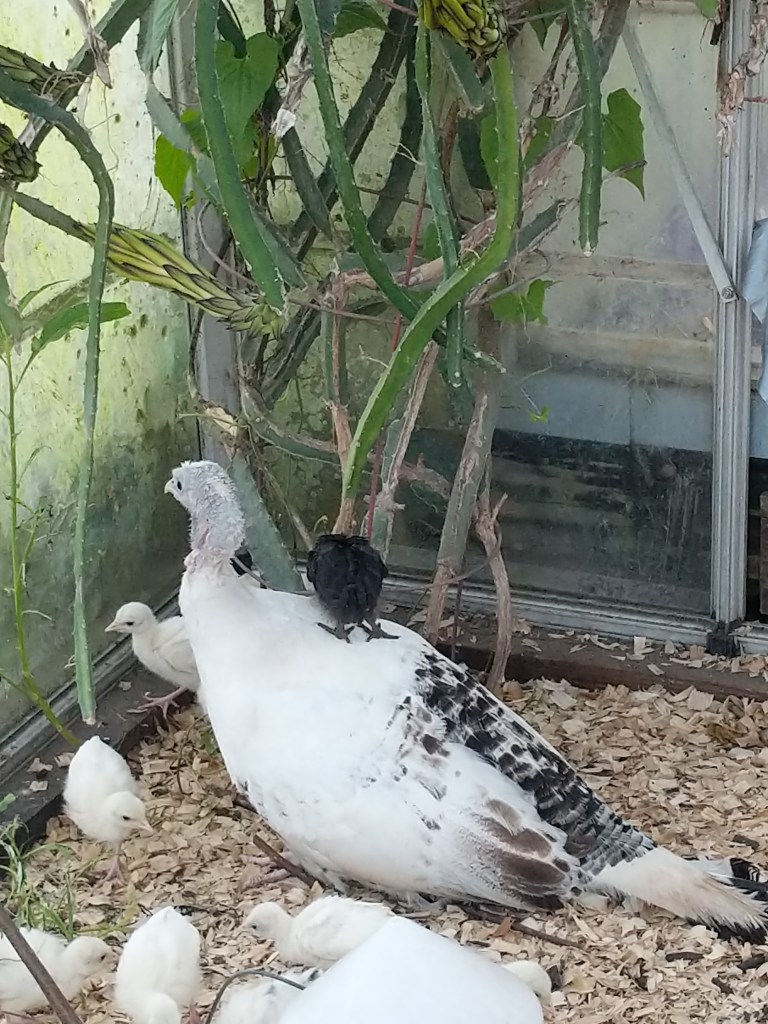
Although the hens lay regularly, unlike many chickens they quit laying in the fall. We have to wait but still, we are excited for next spring and the new batch of chicks!
Why the carrot is (usually) orange
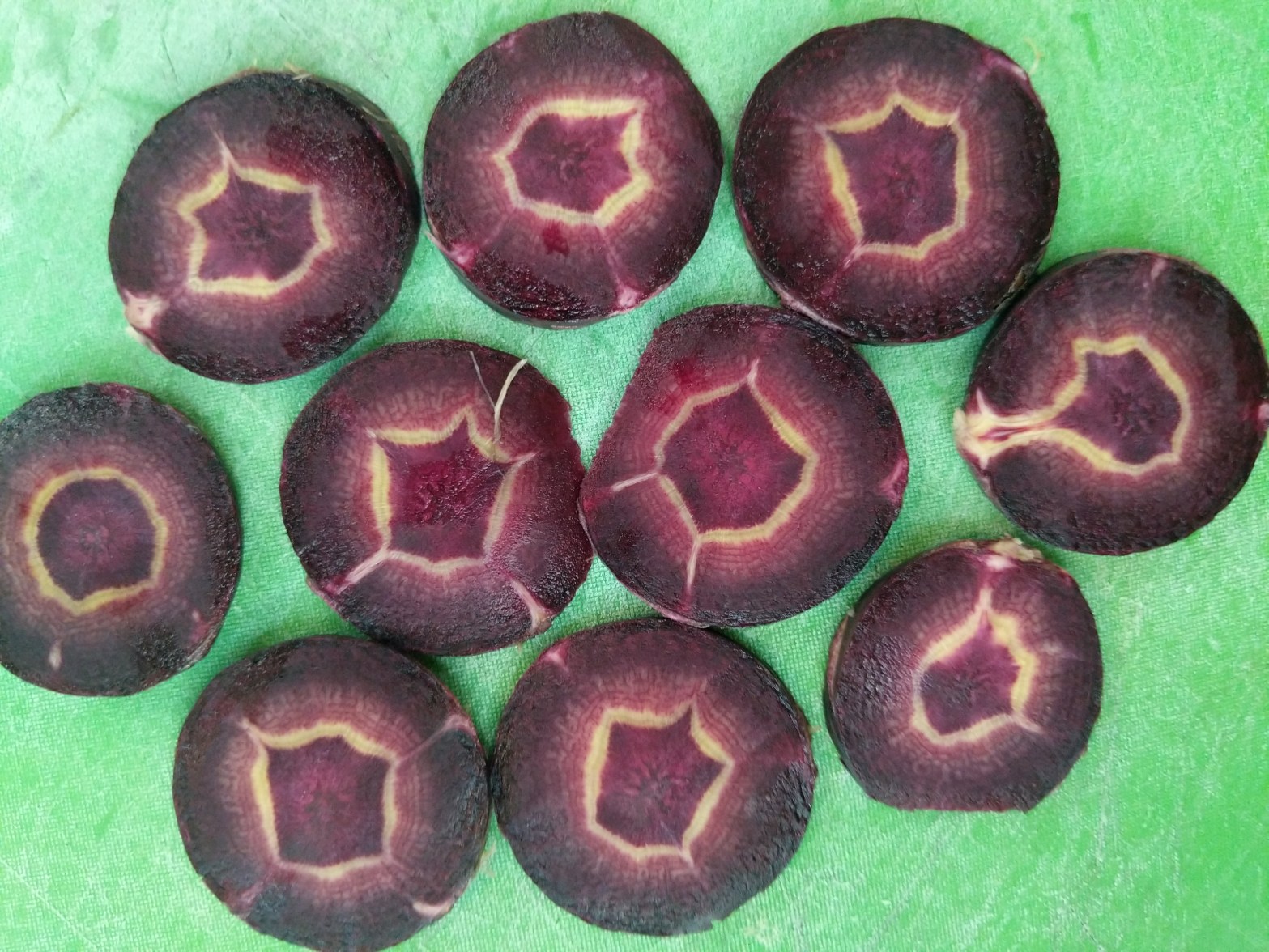
I recently sowed a row of carrots and had only Cosmic Purple–a dark and richly purple-black root, come up from the seeds. Cosmic Purple is so dark it stains fingers for a day after being handled. it is a sweet, crisp, mid length carrot with a lovely top that also carries a purple tinge near the base of the leaves.

So shy are almost all carrots orange? Blame it on politics and citrus. For the details check out this article: https://www.tested.com/science/43812-the-crazy-history-of-the-orange-carrot/

 Big Branch Apiary, LLC