https://blog.mcmurrayhatchery.com/2018/10/25/gail-damerow-discusses-egg-candling/
Apiary Calendar of Events

FINALLY!

It’s a small crop but it’s a crop.
Mite Patrol
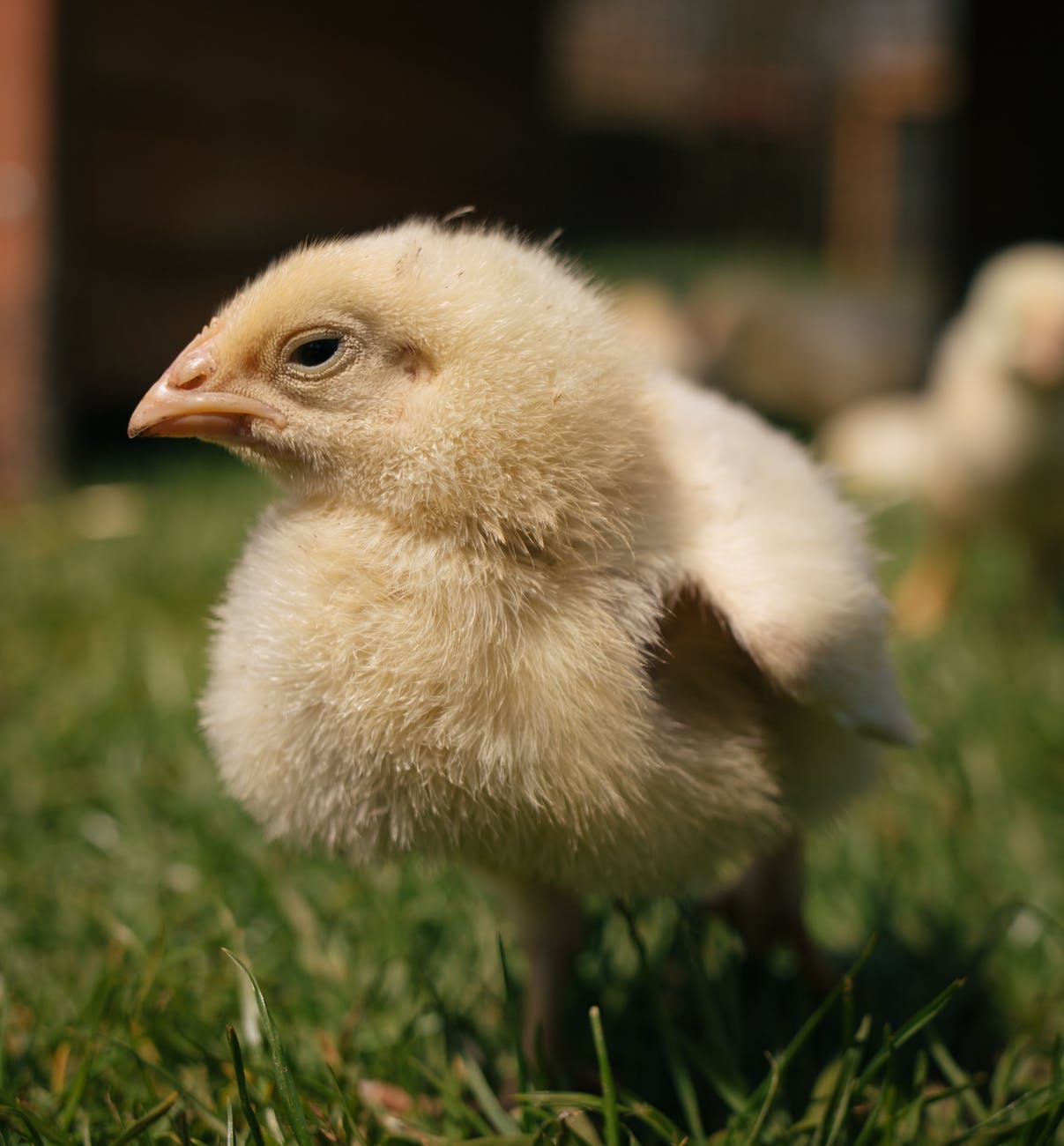
Have you ever wondered why your chickens, or any birds for that matter, love to take dust baths?
There’s a very good reason. Domestic poultry can often pick up mites from wild birds or other infested flocks. Chicken mites are relatives of ticks, spiders, and scorpions. These small mites live on the outside of the chicken and feed off their blood. If left untreated chickens become anemic. They’ll lose their feathers, develop sores, lay poorly, and eventually die.
Mites are actually gray but will appear red once engorged with blood.
Any number of methods can be used to keep mite populations down but here at Big Branch Apiary we add Sevin© dust to their favorite dust bath holes, keeping it on the birds but away from nest boxes and feed.
This is our trick–what’s yours?
Another Typical Spring week on the Farm

Ever notice how Nature never procrastinates? Other than a siesta during the heat of August, and a short breather in winter, Nature is in an explosive sprint to eat or be eaten, to reproduce or die out, and to otherwise keep farmers and gardeners scrambling to keep up.
It’s the last week in May at Big Branch Apiary and we have been scrambling.
Best news ever: the rain finally stopped. Average rainfall for May is 4.6″ but by mid month the area had already seen double that amount. Our ground has been like pudding since March and the road through the bayou, which leads to the berry field, was often under water. The first thing we did when the rain stopped was to repair the road and replace gravel that is probably now in Lake Pontchartrain.
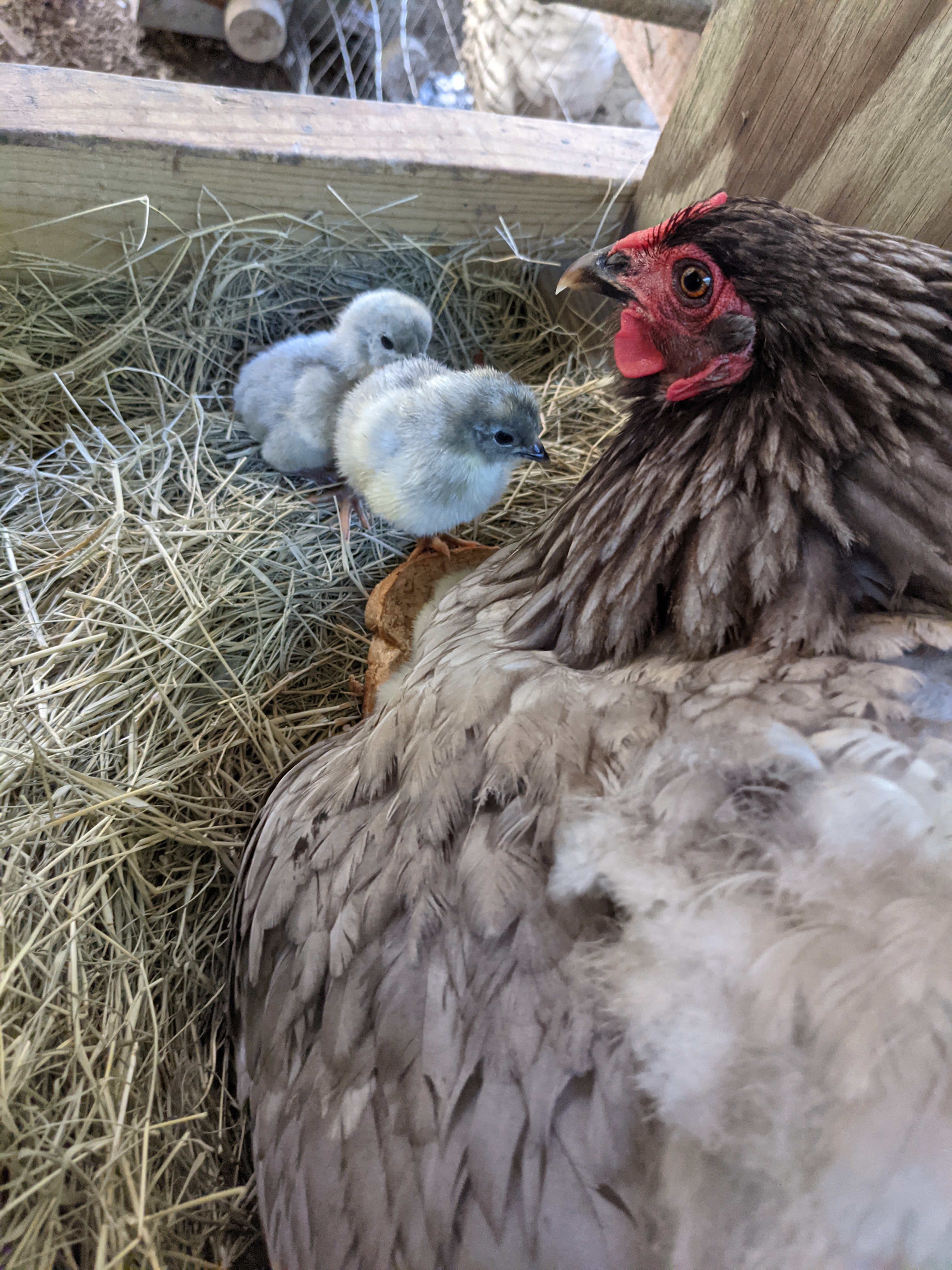
On Thursday the first of seven new home grown chicks joined the flock. Many chicken varieties have had the instinct to set, known as going broody, bred out of them in order to increase egg production (broody hens quit laying). Our blue Wyandottes and one bantam of dubious lineage, are determined setters. Three more hens are on the nest and should hatch out chicks in the next few weeks.

In spite of having a bunch of broody hens egg production has been good. Every Tuesday we deliver a rainbow selection of eggs to Recirculating Farms for inclusion in their produce delivery subscription. Recirc is doing exciting work bringing fresh food to folks who otherwise would have limited access.
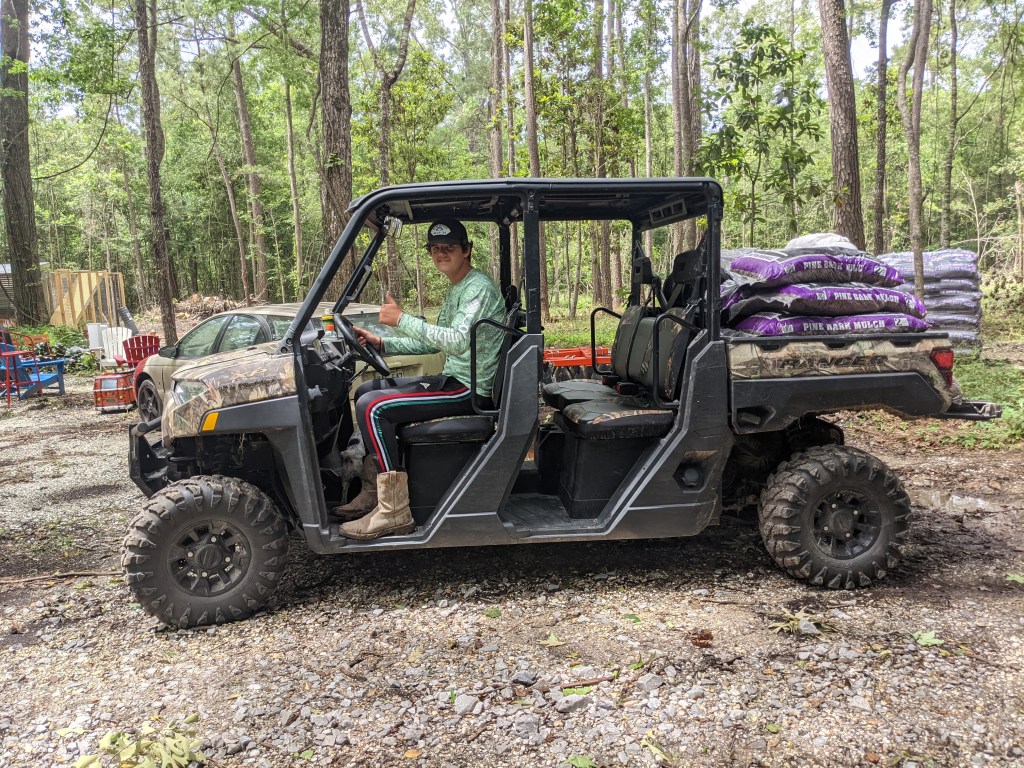
We started mulching the blueberries this past week, getting it laid down before Nature’s little soldiers (weeds) take over the battlefield. A shout out to Lowe’s for quoting a great price on pine bark.
For those who saw the recent post about our tentative turkey travails, you’ll share our grief over the loss of all but one chick. Turkeys are not as domesticated as chickens which may be why the hen kept trying to lead her babies off to the “safety” of the woods. We couldn’t always find and cage her. One morning, at daybreak, we saw her with half her feathers pulled out and a huge wound on her right hip. She limped around calling for her young in a muted and plaintive little voice. Sadly, all but one had been eaten. She’s recuperating and will live but she has been in a lot of pain. Her surviving chick was given to her mother who had hatched out two more turkey poults.

The final news for the week is that the berries are just starting to ripen–gathered a small handful yesterday. This year’s crop will be small but it looks like we may soon have berries to pick.

Fingers crossed for lots of sun, happy hens, and ripe berries.
Update on turkeys

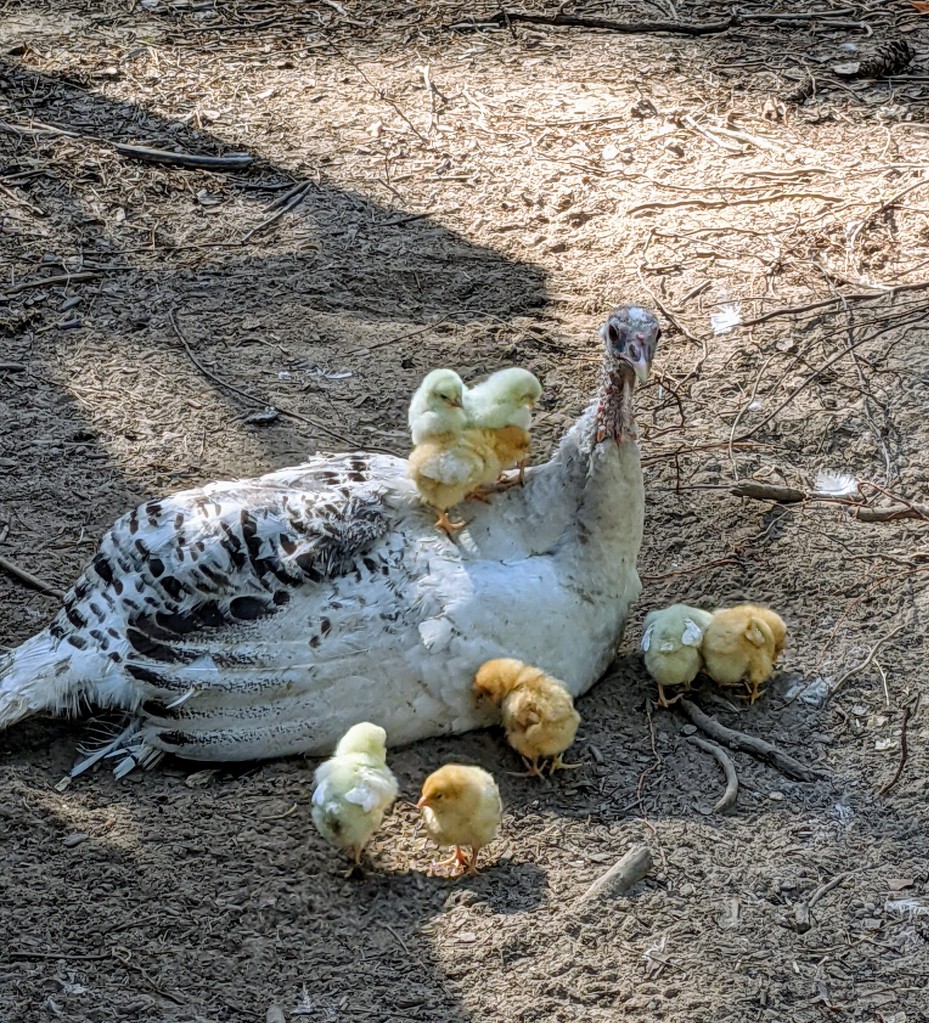
If you read the recent post “Fragile…” you’ll be happy to know that the combined chicken & poult family is doing great. The chickens went to bed thinking they were chickens and woke up thinking they were turkeys.
They all ended up with one hen. They had been divided so one hen had the two older poults & five chicks, and the other had the tinier, younger poult and the remaining five chicks. When it came to bedtime, one hen, let’s call her Bad Mommy, decided she would leave her babies on the cold ground while she flew up onto the roost. Said babies ended up being adopted by the Good Mommy.
So, for today the hen and get 13 babies are doing well.
Fragile, but determined
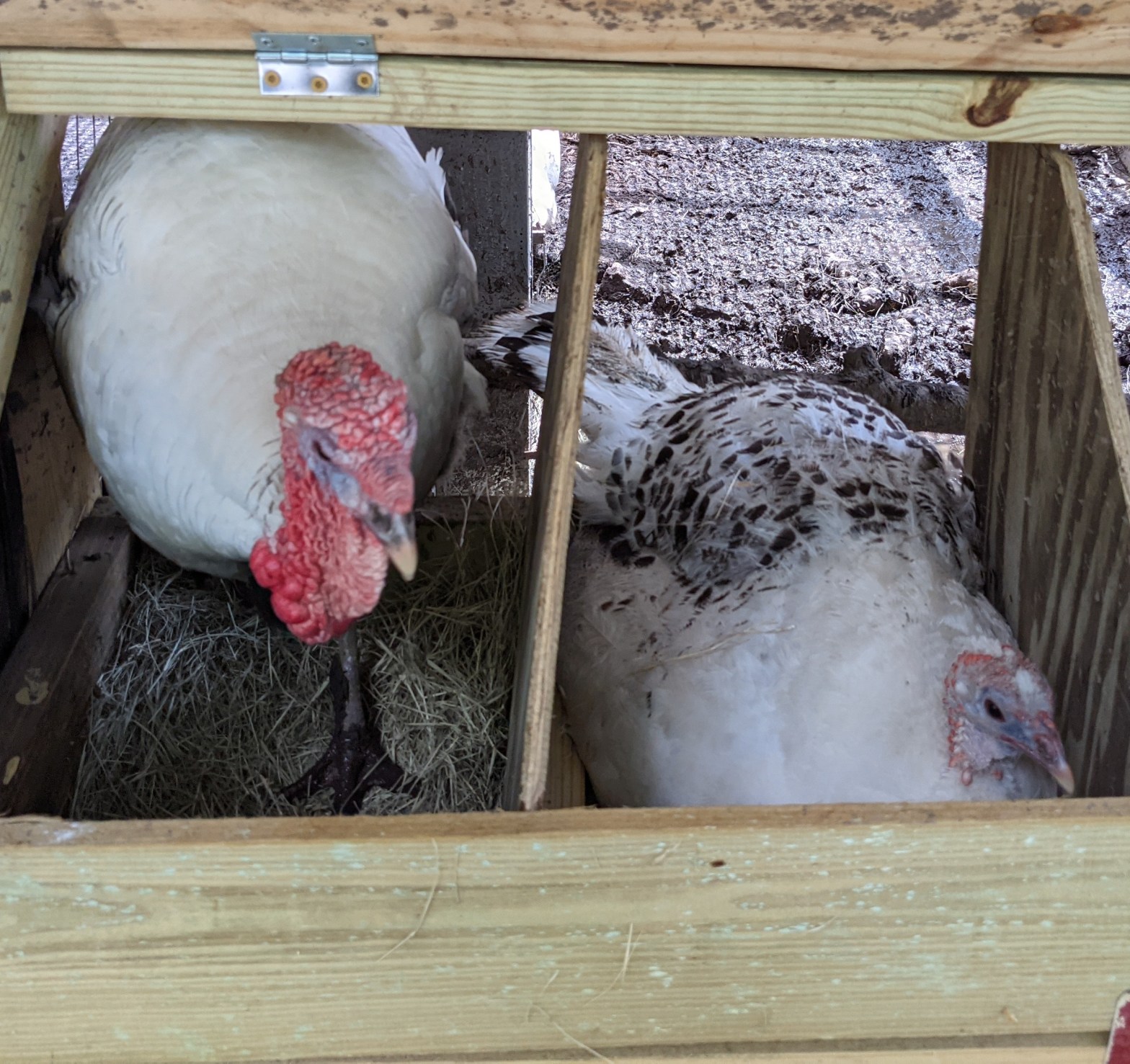
Our turkey hens, usually excellent mothers, had to deal with a move in the middle of nesting season. As a result, they were forced to leave nests half full of their clutch–usually around 10 eggs for these hens–and start fresh in an unfamiliar coop. As a result they frequently changed nests, laying their eggs randomly in different nest boxes. Some days all the hens would be stuffed into just one nest box while, peering out like a tricephalic turkey-monster, the eggs in adjoining boxes grew cold. As a result there was no expectation for turkey poults to hatch this year but the determined turkeys sat on what we thought were dead eggs.
So it was a surprise to hear the faint peeping of newly hatched babies a couple of days ago. And today a yet another poult emerged. Two of the hens are determined to be the mommy, squabbling to the detriment of the young. For the sake of the babies the older hen, who successfully hatched two clutches last spring, was chosen to raise them, and was given the poults and separated from the other hen. Meanwhile, the third hen adopted the remaining egg-mountain in the hope that someone else would still hatch out.
Life is always a surprise, frequently a mystery, and profoundly inspiring in its tenacity. In spite of the less-than-alive smell now coming off some of the eggs, another hatchling is not impossible.
The hen, under a primeval spell, will sit until nearly starved unless she hatches a chick.
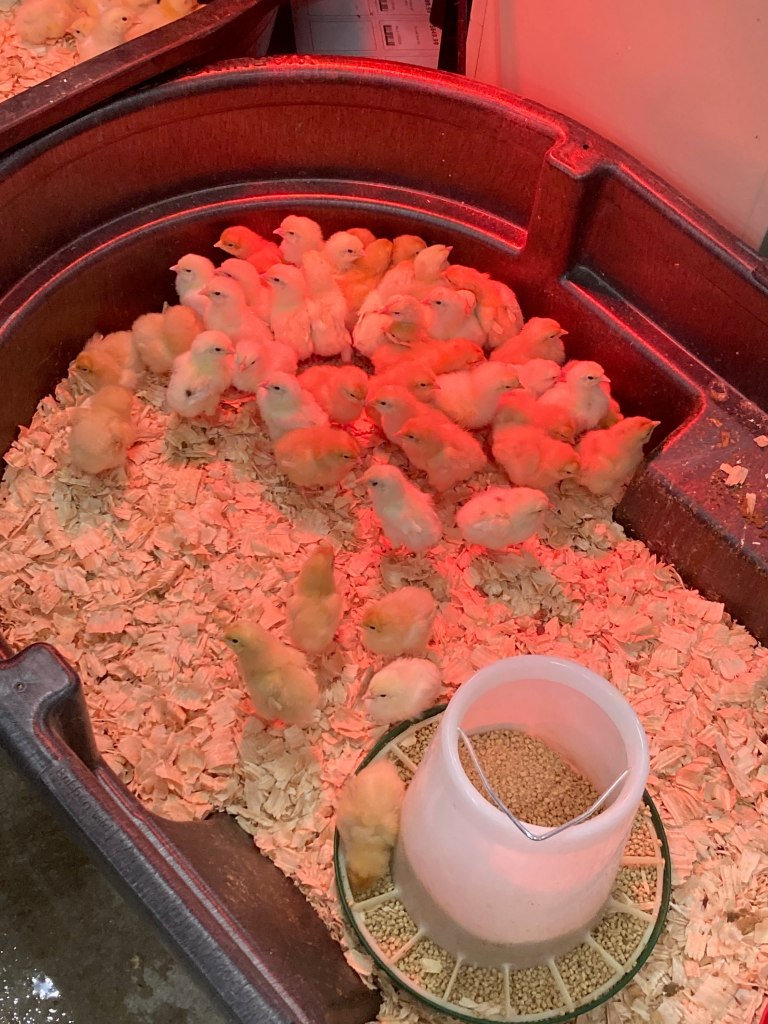
Or unless your favorite delivery guy at Tractor Supply tells you they just got in day old chicks, and the two of you “hatch” a plan to ensure everyone gets a baby.
Turkeys can’t tell the difference between chicks and poults, and visa-versa. As a plus, adding chicks in with poults actually increases the survivability of the baby turkeys who learn to forage from the more precocious chicks.
At Big Branch Apiary we raise Royal Palm turkeys. These are significantly smaller than most other breeds, closer in size to a peacock to which turkeys are related.
Turkey eggs take around 28 days to hatch. Toms don’t take part in the resting if young and in fact our experience has been that they can be lethal. Once hatched we separate the poults and Toms.

The adventure us just beginning for these little guys. We’ll have to check in tomorrow to see how our multi-species families are faring.
A rare bee siting

While enjoying the blooms of a buddleia I noticed this lovely bee on one of the flower clusters. The bright green of the bee and soft lavender of the flowers were a beautiful compliment to each other. And for once nature cooperated, the green bee sitting still while I fished out my phone to get some shots.
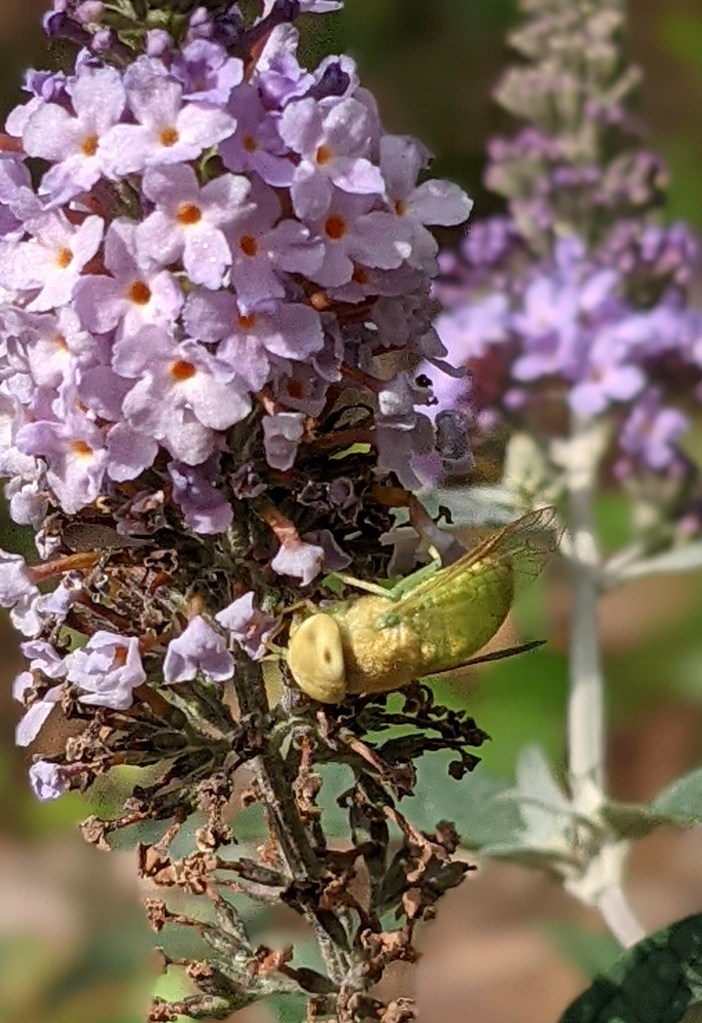
Big Branch Apiary is a registered Monarch Waystation so we’re always adding flowers to the bug smorgasbord. This week we planted quite a bit more asclepias as well as this Buddleia Davidii “Glass Slippers.”
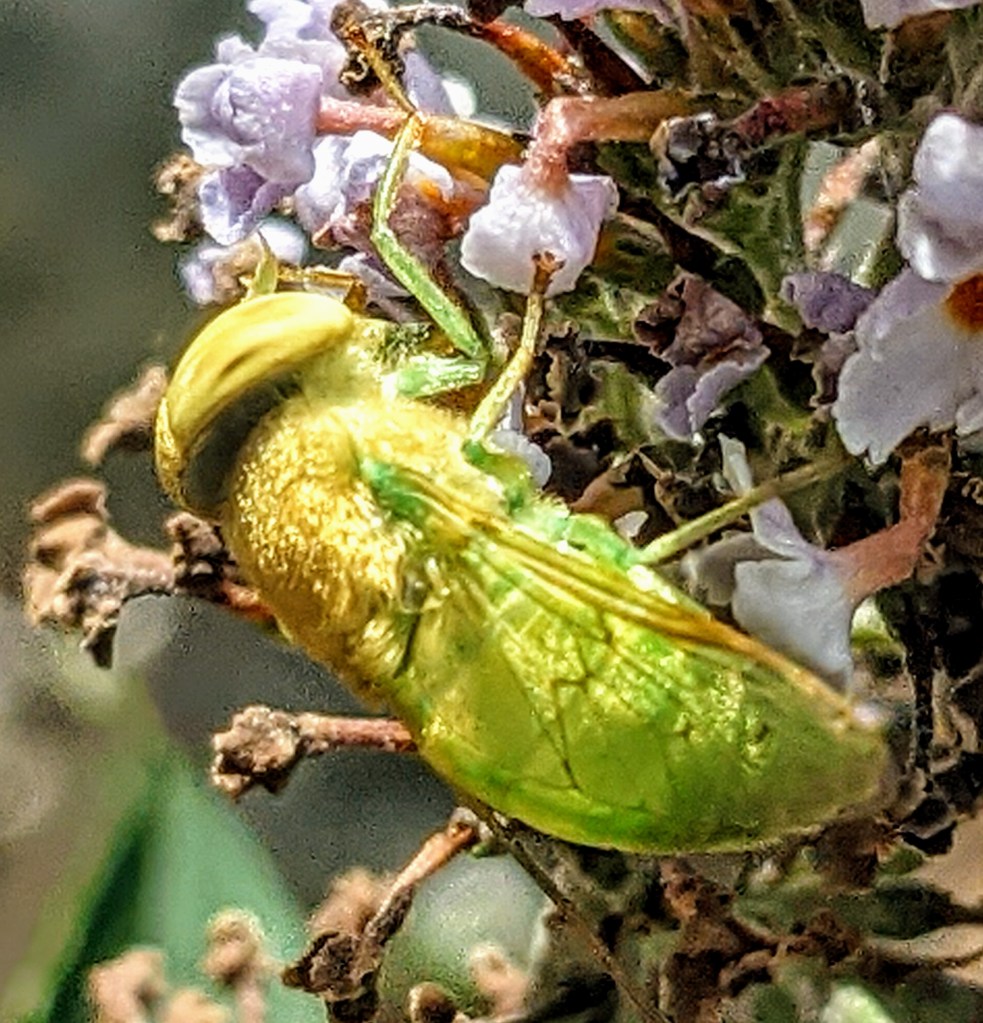
Rare bee indeed. It turns out that my rare green bee was actually an Atylotus–nothing but a d@mπ€d horsefly.
Coming soon to a U-Pick near you
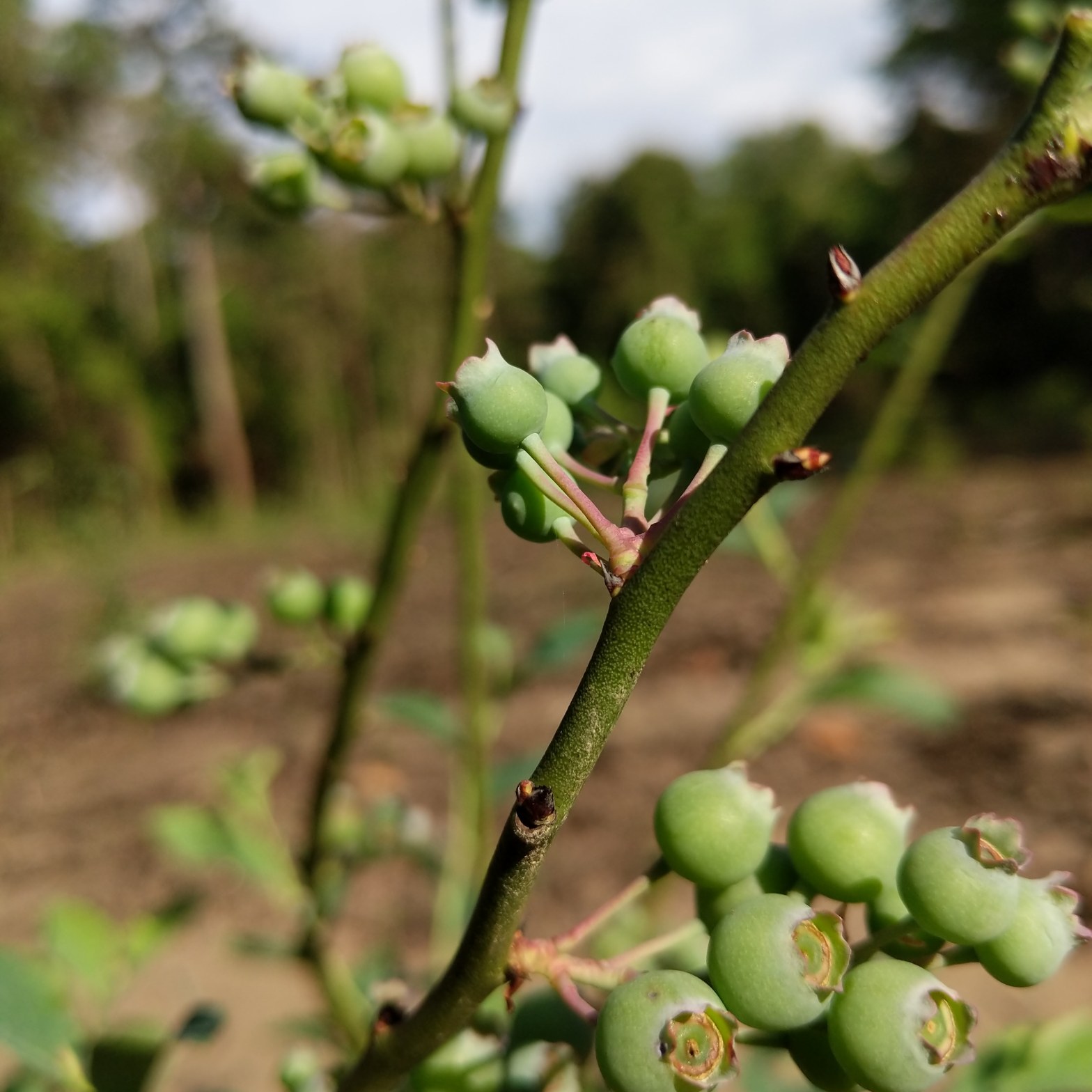
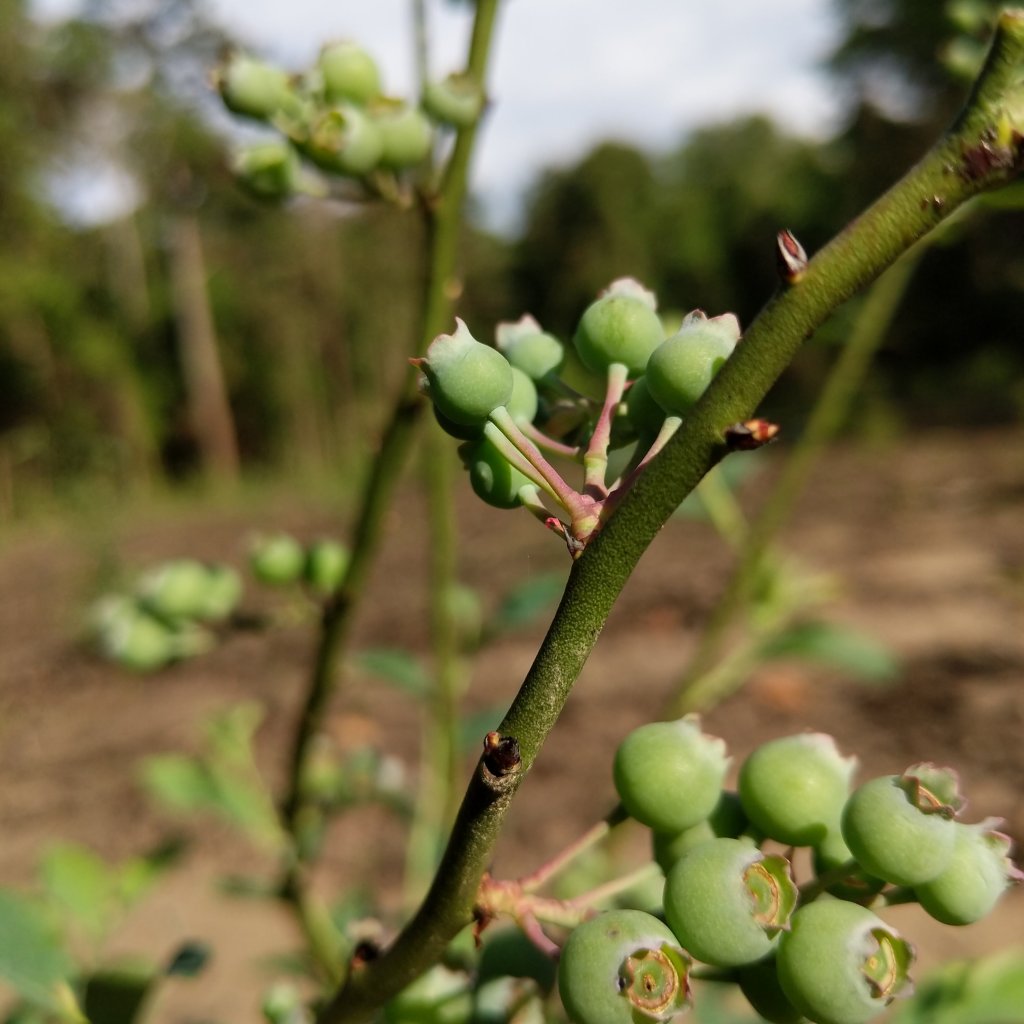
First crop year for these blueberry bushes, and for this blueberry farmer! It shouldn’t be much longer before there’s berries to be picked.
It’ll be a no frills adventure this season. We do have a Port-o-Let but any other amenities, like pavilions and picnic tables, are for next season. To compensate we’ll be selling blueberries at a bargain rate of $4 a pound.
Stay tuned, check out the calendar on our website, or subscribe for updates.
Slender Ladie’s Tresses

Every day there’s a new discovery at Big Branch Apiary. Today it was a delicate, white flower found while planting Redbud saplings. This is Spiranthes lacera, also called Slender Ladie’s Tresses. There were quite a few of them dappling the forrest floor.

Other abundant wildflowers now blooming are Widow’s Tears, Blue Eyed Grass, and Jack-in-the-pulpit which, along with flowering trees such as Holly, red maple, and the oft maligned Tallow, are keeping the bees well fed.
 Big Branch Apiary, LLC