At Big Branch Apiary we yoke (yolk) our prices to the cost of feed and strive to keep the cost down. A dozen of our fresh, free-range*, organic eggs sells for $5. Have Qs? Email us at bigbranchapiary@gmail.com or text us at 985-422-0880 for more info.
“Sometimes,’ said Pooh, ‘the smallest things take up the most room in your heart.”
Today broke peaceful; fog-muted, bathed in pastels. A morning crisp but just barely. A beautiful and perfect day.
Except that it wasn’t.
Today was the last day we had with Teazel. Teazel is–was–a lionhearted Jack Russel not much bigger than a Chihuahua whom we adopted almost ten years ago. She was a horrible citizen of a dog, the dog embodiment of, “The best of times…the worst of times.” And yet we loved her like a child.
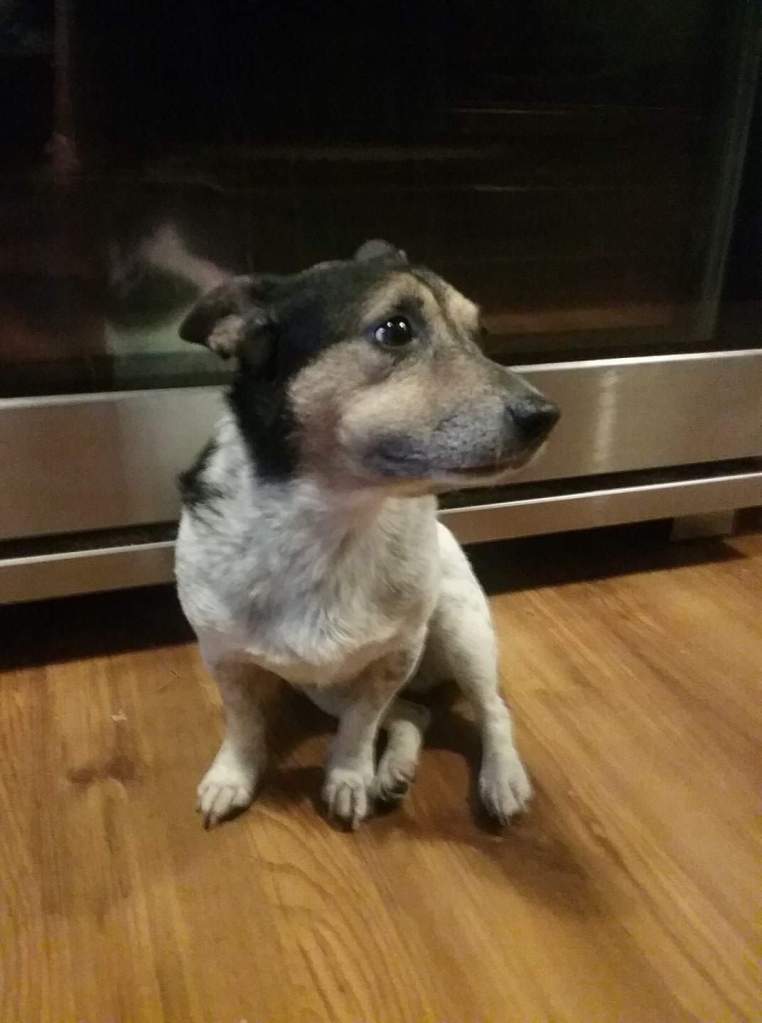
How your face looks after you lick a toad.
Like so many things on the farm Teasel was recycled. We were duped into bringing her home because she was painfully cute–stubby-legged, too-big head, inquisitive eyes, and a heart-shaped black spot in the middle of her back. She chased her tail like it was an intruder and often bit it until it bled. Her answer to everything was to growl. Feed me: grrr, rub my belly: grrr, pick me up: grrr, put me down: grrr. As a result her frequent tail-snapping and constant growling she had been adopted and discarded at least six times. When she was 18 months old she landed– full of spunk, bravado, and separation anxiety–with us.
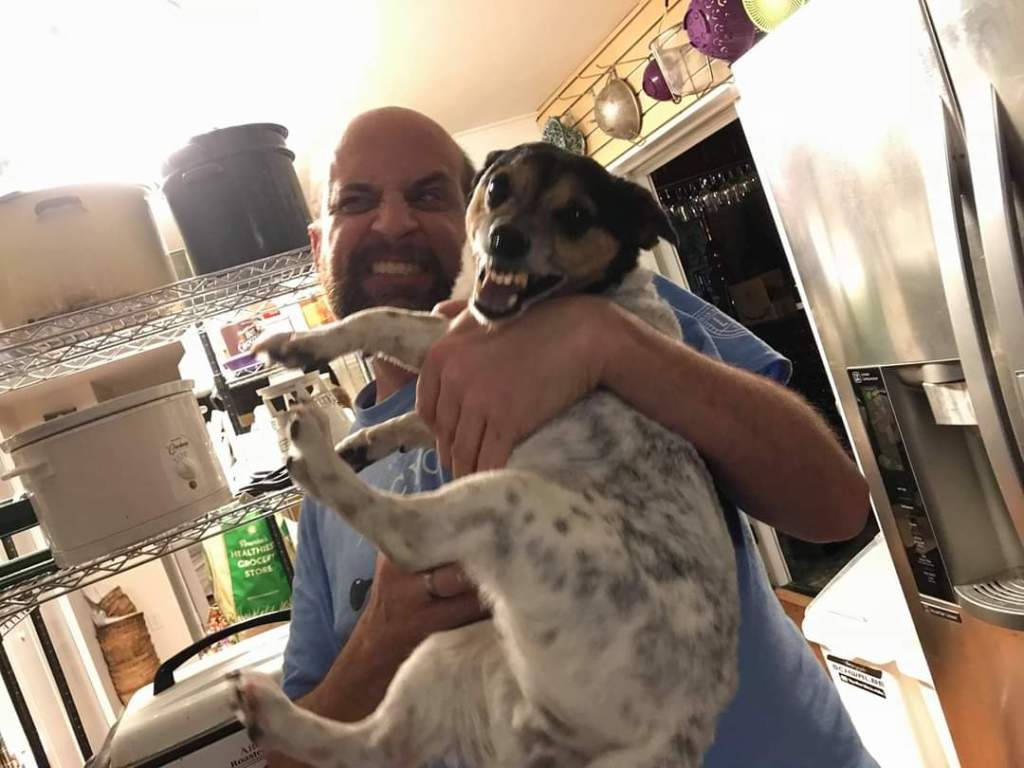
Neither of these two bite. No, really!
We fell in love with this staub-legged demon who would follow us into battle, and without question we became her forever home.
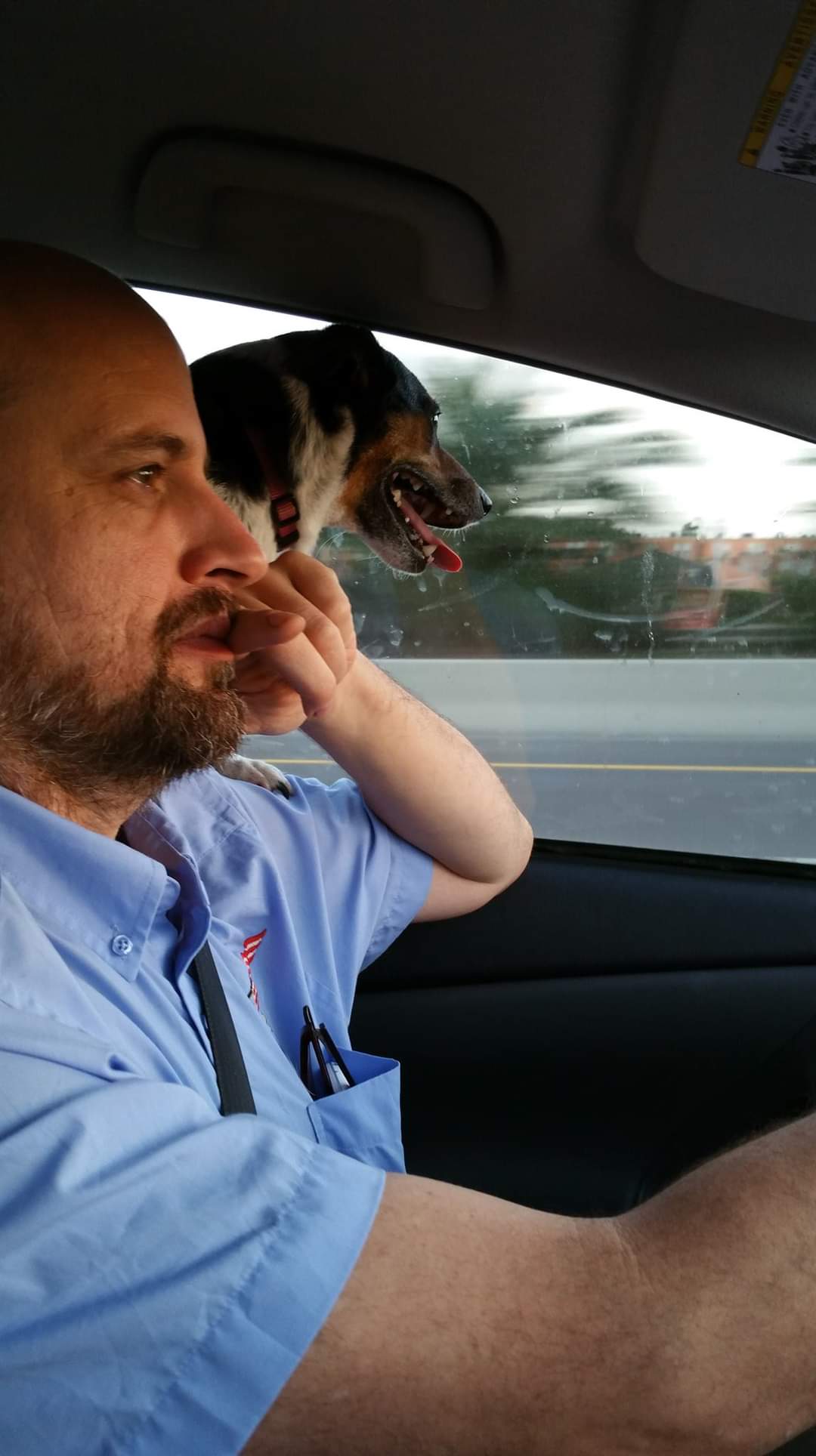
Going for a ride? My favorite thing!
“I used to believe in forever, but forever’s too good to be true.” Milne
Sadly, nothing is forever. Three years ago Teazel started getting a seasonal malaise that was treated with steroids. She was on Prozac, something I judged dog owners for until I had that dog. Then there was a diagnosis of Cushing’s. And then there was the mass in her stomach, the tumor that she succumbed to today.
Big Tom cradles Teazel on her last day.
My heart feels weighted with loss and the cost of love, like a too-small limb on a Christmas tree hung with a magnificent, heavy ornament. Love has a cost. It is like a balance sheet: an increase in the love column is offset by grief in the loss column. Such a price to pay–love little & grieve lighter or love deeply but risk such pain.
The immediacy of loss fades, but the balance sheet remains. Fifteen years ago I said goodbye to Daisy, a dog whose love saved my life. I cradle the lock of her red fur, a memento I kept, and I tear up with equal parts love and loss that feels like I just said goodbye.
And what will go on Teazels memorial? This quote from Winnie the Pooh seems perfect: “How lucky I am to have something that makes saying goodbye so hard.”
A special thanks to the staff at Animal Medical Center, LLC of Covington: their care and expertise gave Teazel many more tractor rides, squirrel chases, belly scratches and peaceful mornings than she otherwise would have had. Also, to Jefferson Feed whose support of animal adoptions is how we found Teazel, and why so many animals end up in loving homes.
We spotted our last Monarch butterfly about a week ago as it assumably was passing by on the way to overwinter in Mexico. It stopped in to dine on our flowers before heading on its way south.
Late season Monarch.
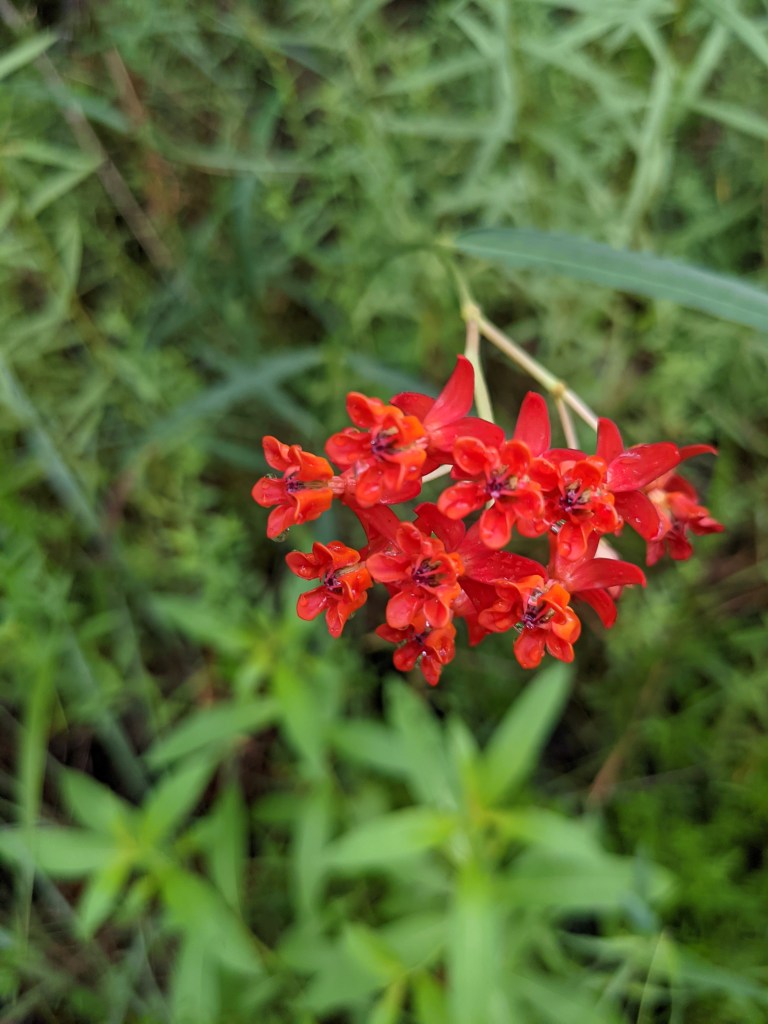
One of the things we still have blooming profusely is tropical milkweed–Asclepias curassavica. Many experts now say to avoid planting it, but if you do have this pollinator fave, make sure to cut it back to ground level every year.
The reason for cutting it back is that spores of Ophryocystis elektroscirrha, harmful to Monarchs, can collect on the milkweed and help spread the infection. Additionally, in warmer climates where milkweed doesn’t go dormant–the Gulf Coast–it may encourage butterflies to stay stateside instead of continuing on to their winter habitat.
Sometimes nature will freeze it back for you.This year we cut it back and made a temporary bouquet/smorgasbord from the discards that the Gulf fritillaries seem to appreciate. Once wilted well toss it in the compost or burn pile.
Can you spot the Gulf fritillary on this bouquet of milkweed?
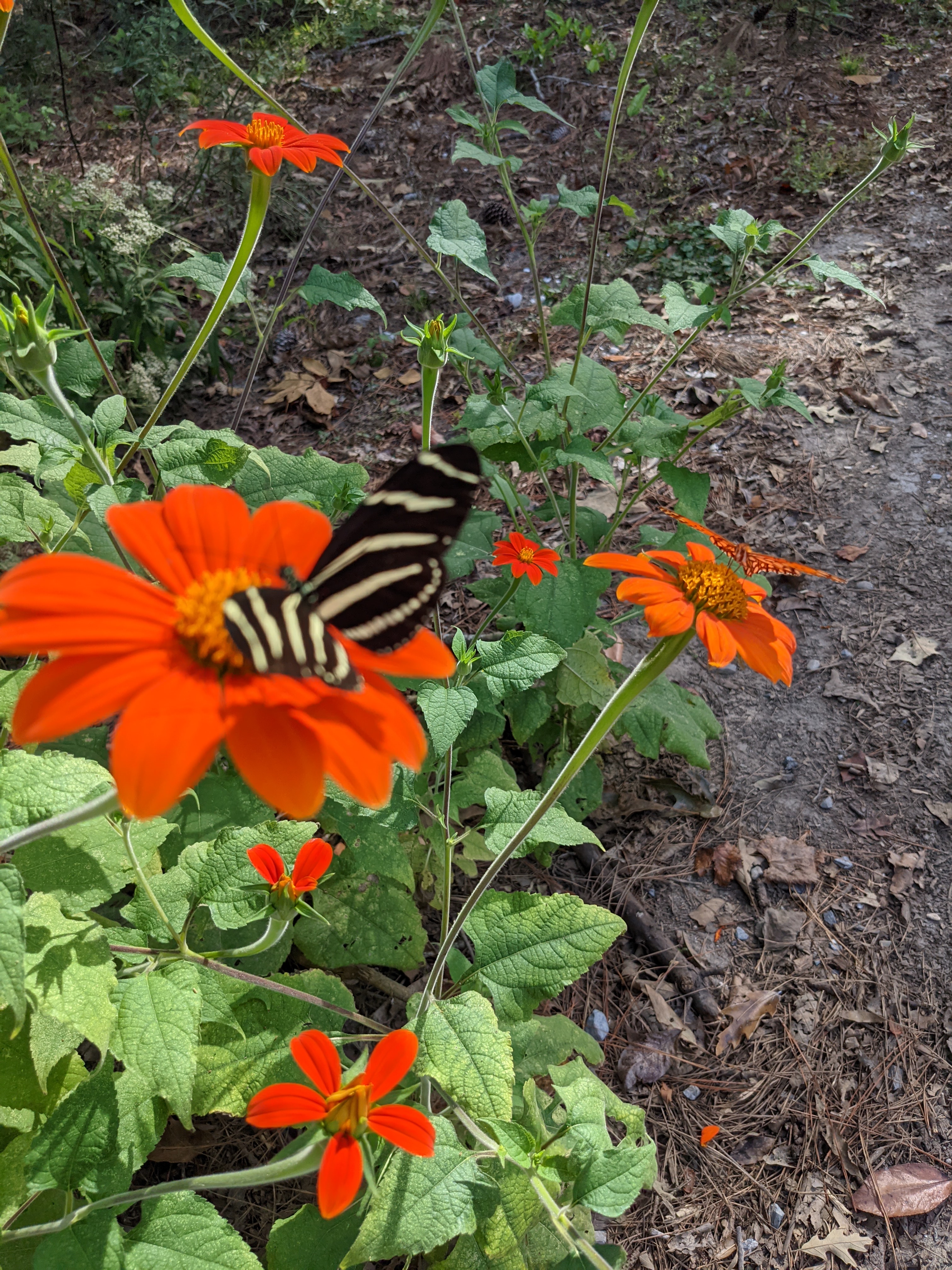
Though not as abundant as in the spring and summer, there are still a lot of things blooming at Big Branch Apiary. Two we can recommend are Mexican sunflowers–Tithonia, and Flamingo celosia–Celosia spicata. We’ve found both to be easy to grow, to bloom until frost, and to attract a litany of pollinators.
A Cloudless sulphur stops on the Celosia (top), and a Zebra longings enjoys the Mexican sunflowers (bottom) growing at Big Branch Apiary.
I can’t stress enough the value of having an experienced mentor when you take on beekeeping. I had never considered putting pollen out for our girls until prompted by my #Hivesforheroes mentor, Scott Steele.
At first I put the pollen he gave me out just to be polite, so when he asked if I had tried it I could answer in the affirmative. It took my girls a day to locate the bucket so when I first looked there were no takers.
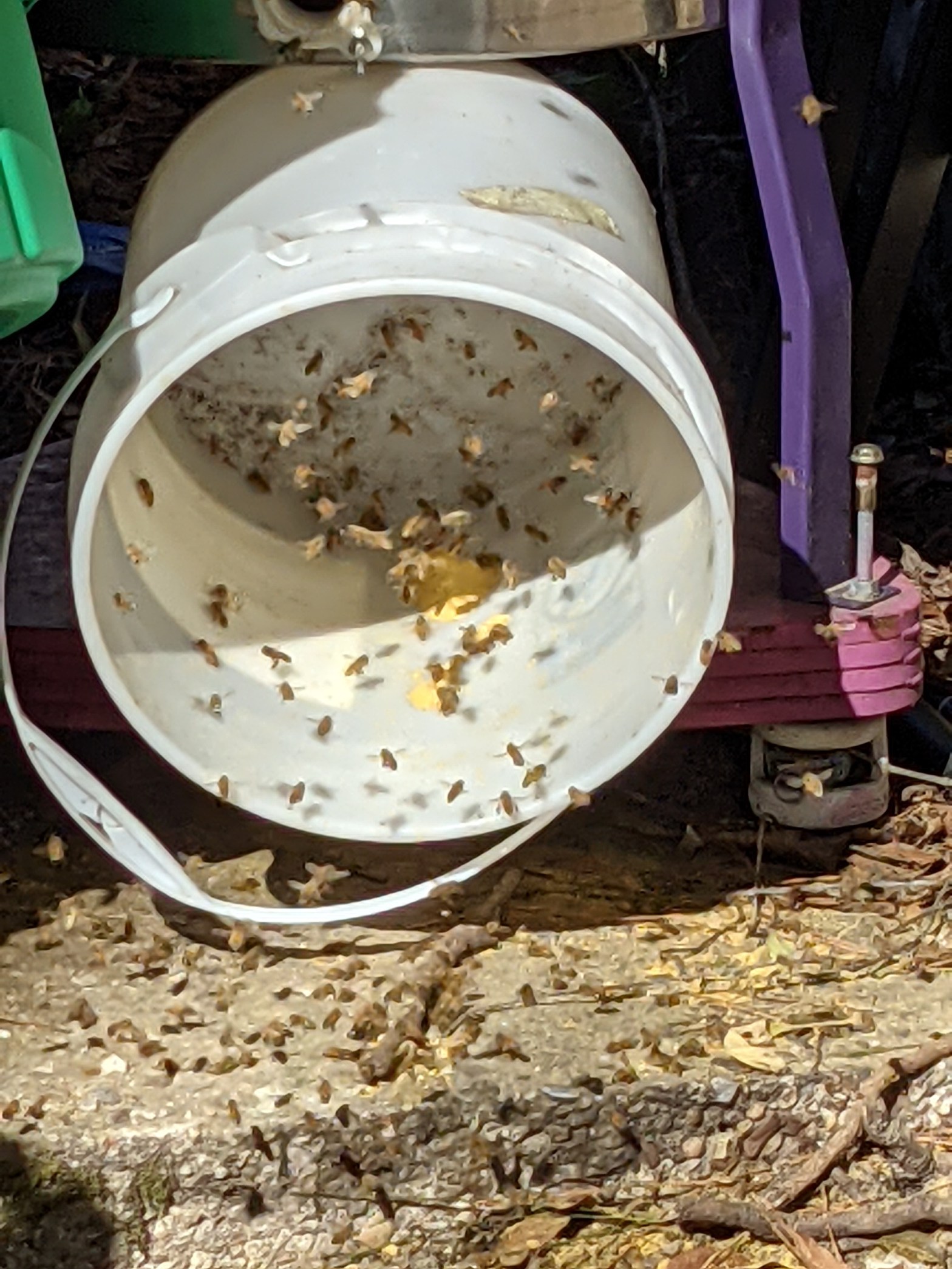
Later that day my husband told me the bucket had hundreds of bees in it. Sure enough, when I checked there were legions of bees lined up collecting it. I had put a cup out and it was almost gone.
Bees use pollen to feed their larvae. It’s usually abundant as long as flowers are blooming. But much like the sugar water we feed them to get them through times of nectar draught, the bees aren’t always going to be interested in offered pollen when there’s plenty available in the wild.
So, happy bees are now on their third cup of pollen in two days. Big thanks again to my mentor and Hives for Heroes for the marching orders.
Bees at Big Branch Apiary in formation for their pollen feed.
First, let me say we weathered Ida without losing a single bee or feather from the flock.
It’s been a week since Hurricane Ida tore through southeast Louisiana. I’m sitting here on the steps of our RV, our home until we get the barn up, sipping coffee to the hum of generators. The weather is pleasant, in the high 70s for now. It will climb near 90° before noon. But infrastructure is coming back. Gasoline and propane are easy to get so we can run our generators to power our well pump, cool the RV, keep our food frozen. The local power company, CLECO, estimates we’ll have power by tomorrow–Wednesday night.
We evacuated to Picayune, a 40 minute drive from the Apiary. We set up overnight behind a Walmart with our three dogs and Peabody. The next morning we came home–an adventure that took three hours of dodging fallen trees, power lines, and flooded roads!
Our box-canyon safe harbor behind the Picayune Walmart.
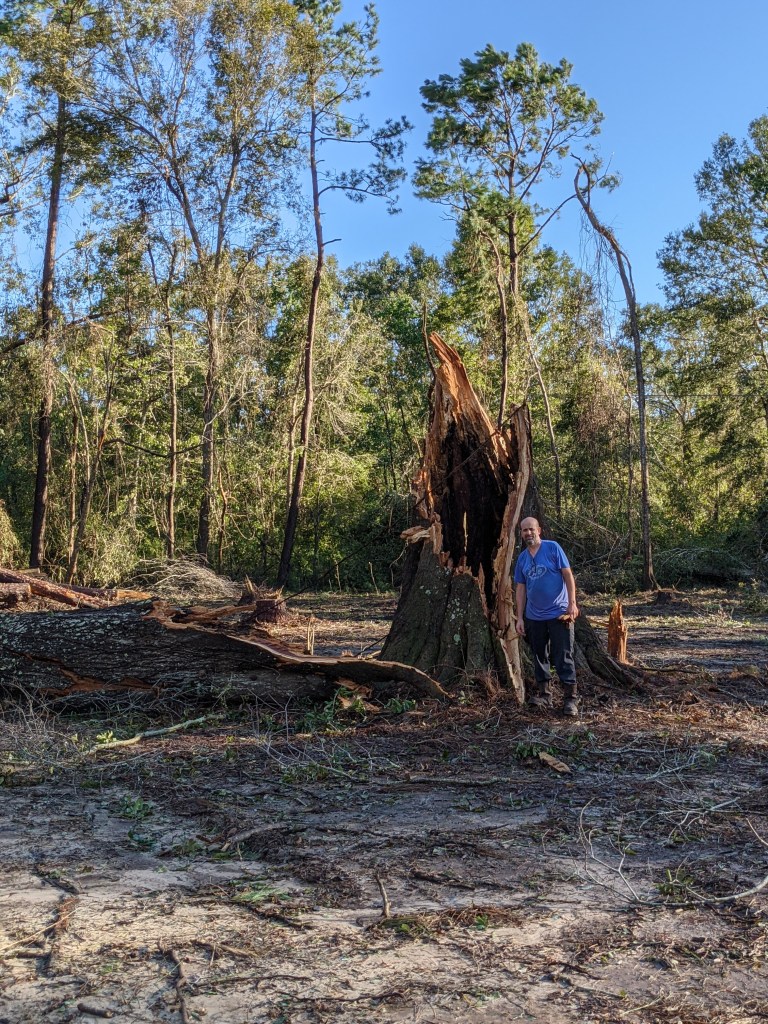
The one heartbreaking casualty of Ida were the huge trees she tore down. On the Apiary these were mostly oaks. One in particular, a magnificent Water Oak we intended to leave in the middle of the new berry field being cleared, came down. The massive trunk was mostly hollow! Water oaks are not long lived so it was likely to have fallen even without the storm. Better to fall now while we still have the crew and equipment to clear it, rather than on top of blueberries or farm visitors.
Tim standing in front of the hollow trunk of one of the many oaks we lost. This one was in the middle of the new berry field we are clearing.
Post-hurricane we saw a huge increase in butterflies and a notable drop in wild birds at our feeder. The bird feeder usually empties within a few days but is still half full ten days later. We have a lot of mangled, but still blooming flowers at the Apiary which are sustaining the butterflies right now. I remain amazed at how something as apparently fragile as a butterfly can survive a hurricane.
A Dogface butterfly getting a meal. She joins the swarms of Zebra Long wings, Monarchs, Gulf Fritillaries, and swallowtails we’ve seen in the wake of the hurricane.
Tim went back to work today. I’ll mow the berry field before it gets too hot. Slowly, life is returning to the intermittent peace we like to think of as normal.
Be safe as possible in these wildfire, hurricane, virus plagued times. Be thankful to be alive to experience it.
Back in June our peahen took an interest in nest boxes on par with a vegan’s interest in the Whole Foods produce department. Eventually she selected her box. Over the next few weeks she lay three large, buff-colored eggs and then started setting.
I was so excited. I looked up how long it took to hatch peacocks. I made a note on my calendar. I settled into the role of expectant grandmother. Three days later she missed the freedom of a child-free life and abandoned the eggs.
I was crestfallen, but before the eggs got cold they were added to the nest of one of the turkey hens. Said turkey had led her spring brood out into the woods to hide them. The next morning her chicks were gone, her body mauled. One of her toes had been torn off. After a long convalescence she healed and then she started sitting on any egg she could find, moving from nest box to nest box, determined to replace her lost brood. She did this for months. As she moved I moved the peacock, and a few turkey eggs, with her. Eventually she stayed (mostly) put and to everyone’s surprise a chick hatched out on a Thursday in mid August. By Saturday there were two chicks along with a noted stench. The turkey was lifted off the nest so the source of the smell could be investigated. There, crushed by the hen was the rotting body of a half-hatched baby, the two live hatchlings glazed in gradeaux from the long-dead nest mate.
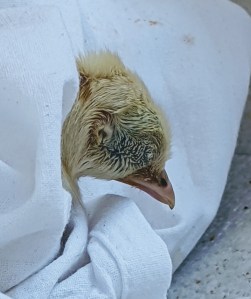
The fuzz of the live chicks was caked to their bodies. They couldn’t retain heat and were near-death. I collected the too-cold little birds, and took them back to the RV where a marriage and three dogs already try to coexist. It is one of the sacrifices we make as we wait for our barndominium to be built. I prepared the chicks a bath. They chirped contentedly as I scrubbed sibling-rot out of their fluff, eventually falling asleep in my hand as I held them in the warm water.
After the bath came a session with the blow dryer and meal of sweetened egg yolk. They got another dropper full around 1:00 AM when their chirps grew insistent.
At three days old these should-be-balls-of-fluff are barely alive and caked in rot.
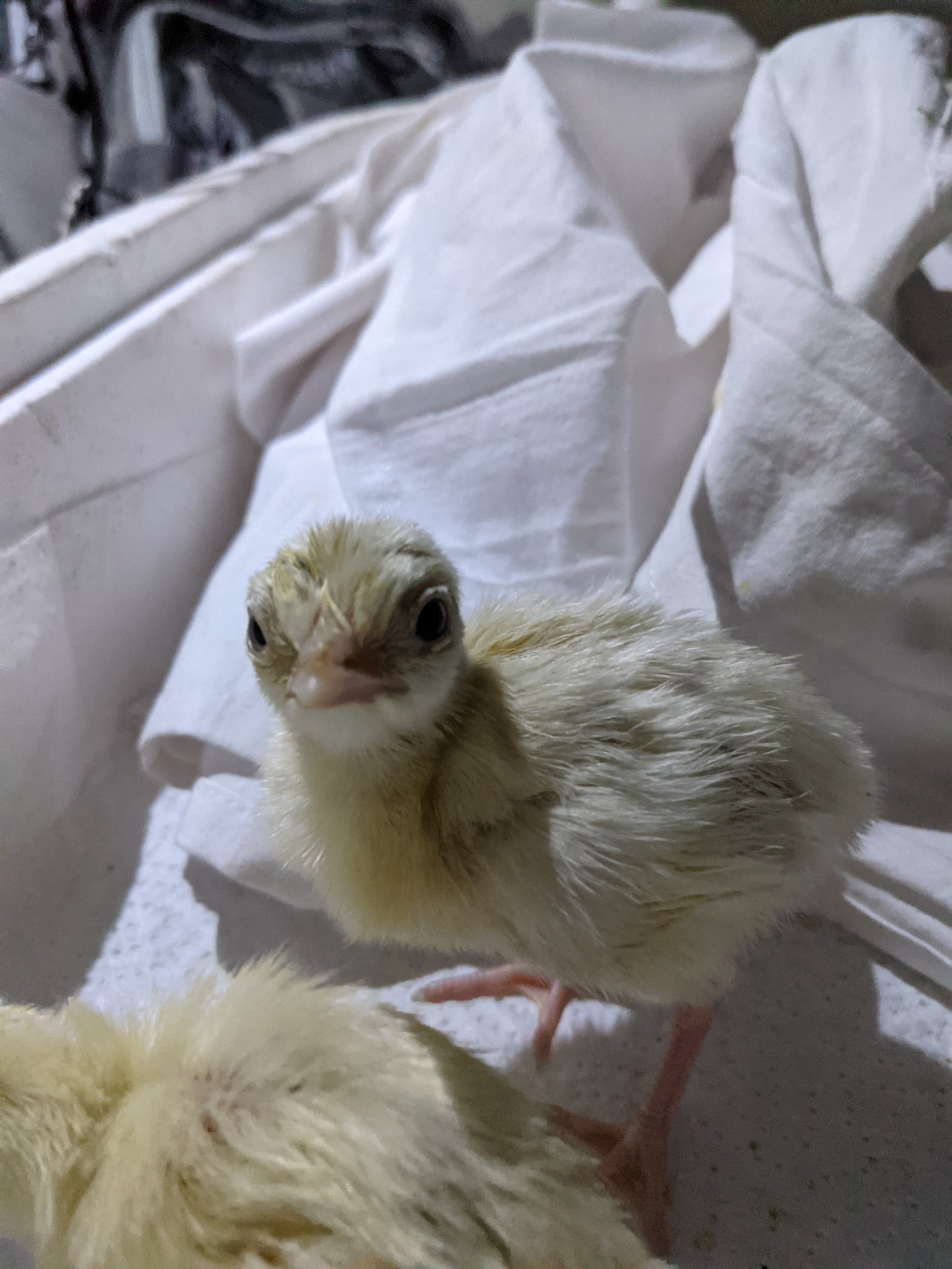
Turkeys and peacocks are close cousins. Turkeys are Meleagris gallopavo, peacocks are Pavo cristatus. Many of their vocalizations are similar. Males of both species parade with fanned tails at full mast. As babies a leucistic peachick is visually similar to a Royal Palm poult. Two giveaways identified both chicks as peacocks: no nose wattle, and both had blue eyes.
By the 4th day both were doing much better although one was notably more robust. The smaller, needier chick had trouble staying feet-side-down as well as not eating well. He was named Hei Hei after the quirky chicken in Disney’s Moana®. The other one became Not Hei Hei.
Hei Hei and Not Hei Hei eating dinner.
On day six there was a notable difference. Hei Hei struggled to thrive. He was fed via dropper until he fought it. He only wanted to sleep. Conversely, Not Hei Hei had transformed into a curious, famished, constantly vocal pest.
Not Hei Hei sharing a food bowl with our Jack Russell, Teazel.
It’s now day six. Hei Hei will not likely see another day. He’s tucked in, warm, and as comfortable as we can make him. Not Hei Hei is now always where he can see and hear me to stop the plaintive wail he makes if left alone. He is either being carried in the pocket of my garden vest, on the table tearing chunks off a slice of bread, or (like at this moment) on my chest preening, pecking occasionally at the screen as I type.
Hei Hei’s final hours. He has become tired, quiet, and disinterested in food. He is a reminder of the often heartbreaking side of farm life; of life in general.
Life causes us to dare hope, to strive, to go forth often in the face of poor odds. The potential magic outweighs the fear of loss and disappointment. As Hei Hei fades, Not Hei Hei has integrated into our life and for now, brings the occupants in our tiny RV to two humans, three dogs, and a peacock.
Anyone living in the gulf south knows how bad mosquitoes can be. This year, 2021, has been exceptionally wet. Besides the flooding, it’s resulted in an impressive squadron of hungry mosquitos. My signature summer scent is deet, and still I get bit.
But my mosquito bites are nothing as bad as what the chickens suffer. In spite of any measures taken to protect the flock, they cannot escape and every night are served as a meal for the swarm.
in early July I walked into one of the runs and felt the telltale tug of web. I looked for the source and there she was, a massive spider. She was hanging in the middle of a gold web which spanned a third of the run, and that web was littered with mosquitoes.
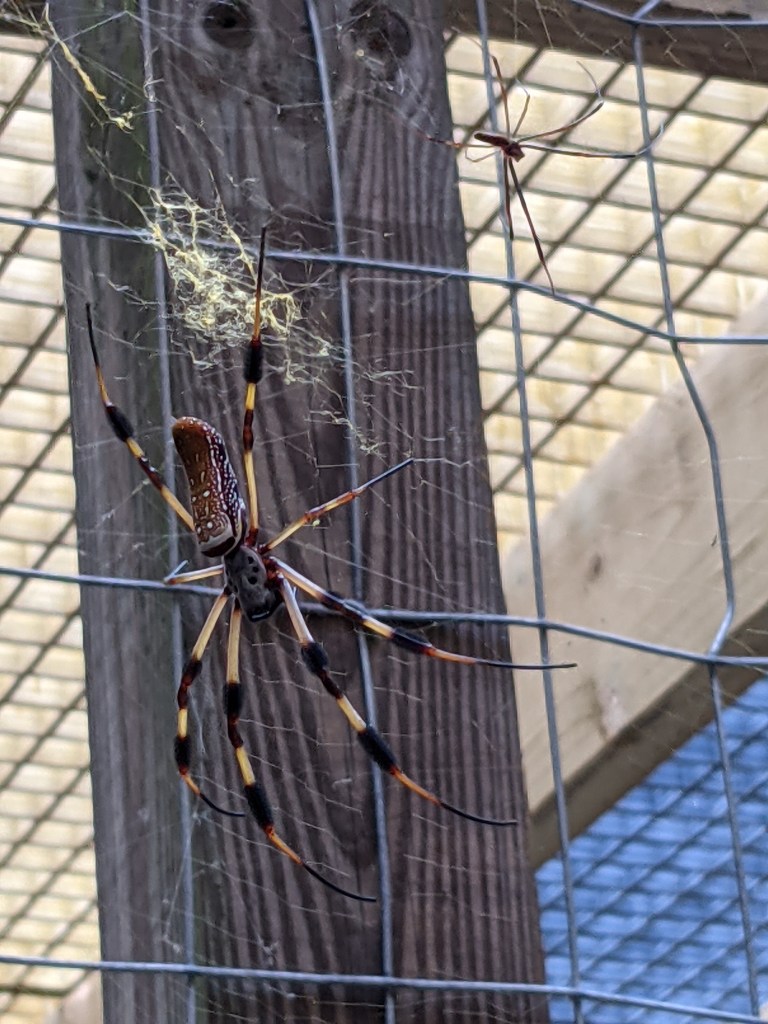
She was not alone. She was just the first one to catch a farmer in her web. Four webs had appeared seemingly overnight and now sieved mosquitoes out of the chicken coop. Each web held a massive female spider. Massive: about the size of a woman’s splayed hand. These are Golden Orb Weavers, often called banana spiders here in south Louisiana. They’re found around the globe in warm climates. Some are venomous but those found in the Americas, while able to bite, are not usually considered poisonous.
Each web is also home to one or more tiny, plain brown spiders. These are the males and once they mate the female will usually eat them.
This spider anchored her web to the top of one of the best boxes, causing her to bounce every time we gather eggs.
The web is a lovely gold color due to carotenoids in the silk. It’s strong–it can catch and hold birds–and has been used for everything from fishing nets to clothing.
So, while our four “Charlottes” may look terrifying, we’ve set boundaries, stay out of the web, and let them continue to help keep the mosquito population at bay.
A pair of the Golden Orb spiders inside the chicken run–the male is in the upper right. For scale that is a 4×4 post in the background.
Check out this fun article from Owlcation.com if you want to know more about Golden Orb Spiders.
So much of the natural environment is at risk these days. The Earth is seeing the rapid reduction things from bees to glaciers and it often feels like nothing can be done. The entirety of the problem is too much for one person, one corporation, club, NFP, or government, but maybe if just one small part of the issues is tackled, an impact can be made.
This is Lanceleaf milkweed, a native variety we haven’t yet found on the Apiary though it is growing nearby.
Enter Monarch Watch, an organization that targets saving the majestic, mysterious, and once ubiquitous Monarch Butterfly.
Monarchs are migratory insects that travel from Mexico to Canada in a trip that can take 5 generations to complete. Once common, their numbers have declined dramatically due to storms in their wintering ground, herbicide use, and agricultural practices that remove milkweed–a critical plant in their lifecycle–from their habitat.
Milkweed is a species of ~200 genus of plants in the Asclepias family. And while the butterfly of the Monarch can eat from many different flowers, the caterpillar must eat milkweed. As such, milkweed is a the heart of any Monarch habitat and population growth initiative.
A monarch visiting our tropical milkweed plants. This is a yellow cultivar.
While Monarch Watch is a non-profit that works to conserve the Monarch Butterfly, a side benefit in helping also Monarchs benefits other pollinators such as bees, birds, and bats that are facing environmental decline. The organization’s web site has everything you need to know about the life, migration, population, and WAYS TO PERSONALLY HELP save the Monarch.
Big Branch Apiary is involved in this initiative. We are registered Monarch Waystation, #31399. There are currently over 35,000 Waystations and you can register your won garden, estate, farm or business landscaping as a Waystation if you meet the criteria. Find the latest world-wide Waystation location list here. As part of our involvement we grow lots of food-producing flowers including six varieties of milkweed:
Asclepias curassavica, the variety most people are familiar with. this variety needs is loved by the caterpillars but as a North American non-native it has the potential to disrupt the migration of the butterflies and should be cut back completely in the winter.
6. Gomphocarpus physocarpus, also known as balloon milkweed, hairy balls, and bishop’s balls. This one is from Southeast Africa and takes two plants for pollination.
Here at the Apiary we find that, in addition to the milkweed, seeding with zinnias and coriander will attract a lot of butterflies when planted along with native wildflowers.
Come visit if you get the chance, or register for your own Monarch Waystation and help do your part to save these majestic creatures.
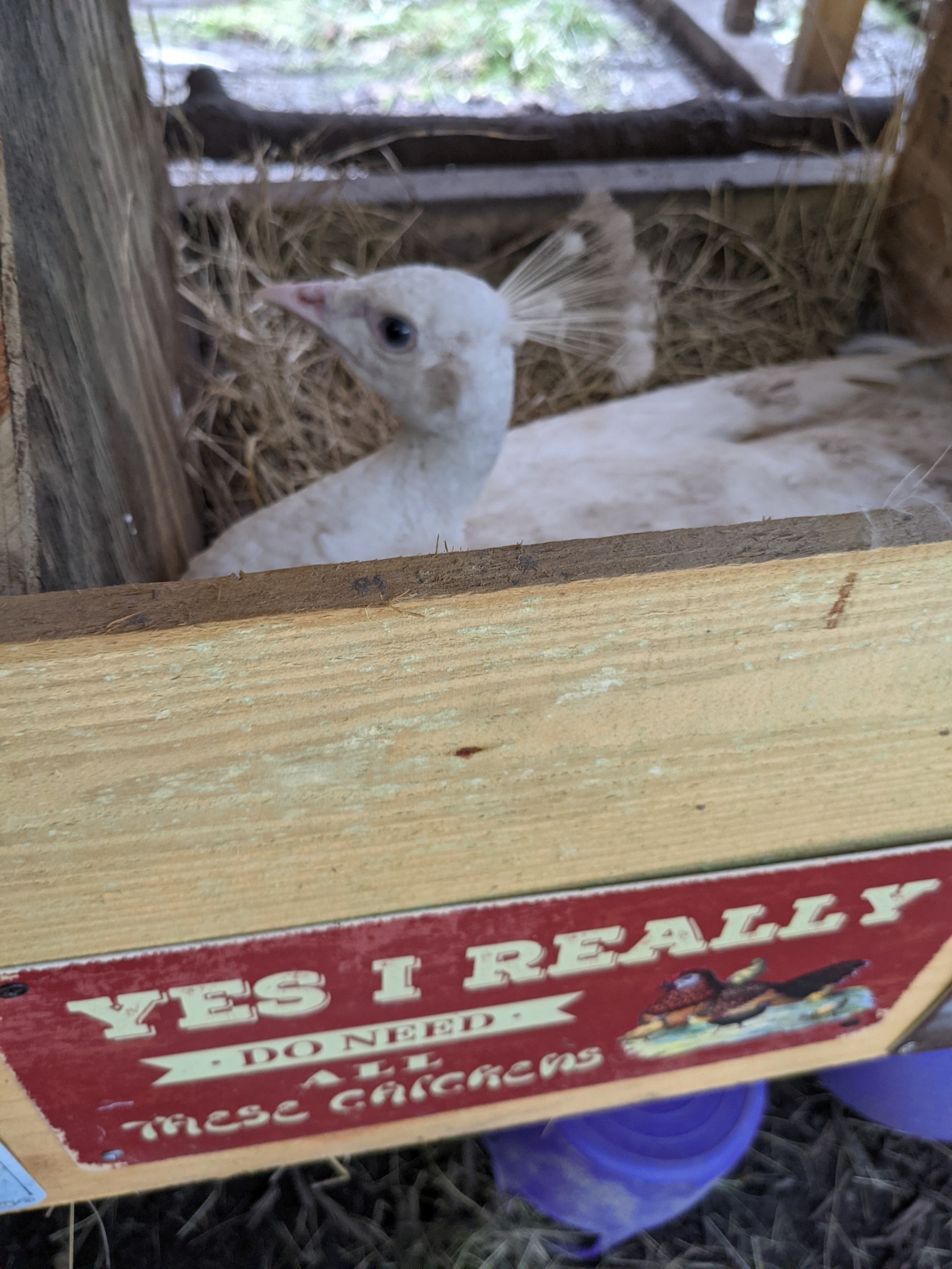
After only laying three eggs the peahen–we call her Mrs. Peackockles–decided to start the roughly 28 day hatching process. She’s also setting on a few turkey eggs that got laid in her nest. Fingers are crossed for a healthy delivery early as the 9th of August.
In the post “Mite Patrol” we discussed why chickens take dust baths and shared how we manage the mite load in our flock.
But I think we may have come up with something better than Sevin® dust to add to their dust bath area: diatomaceous earth.
Diatomaceous earth is made of minute exoskeletons of diatoms, hense the name. The dust-like silica shells of these creatures is abrasive to many insects, killing the bugs while not harming animals.
Diatomaceous earth is considered generally safe and not a poison, there are package warnings which you should follow. For an in depth article try this link from the National Pesticide Institute.
We added 20 pounds to the area the Big Branch Apiary flock likes to dust in and the hens immediately took advantage of it. You can usually find diatomaceous earth at garden and pet supply stores. Try it out for a pesticide free mite treatment.











 Big Branch Apiary, LLC