January 4th: The Trolley Question

“I’m a fun father, but not a good father. The hard decisions always went to my wife.” ~John Lithgow

Many of you are probably familiar with the Trolley Question, an ethical quandary first posited in the 1960s regarding right and wrong, and taking action (or not) for the greater good.

The scenario goes like this: you see a speeding trolley. It is about to crash, killing the five people on board. You are near a track switch and can save them if you pull it but there is a man on the alternate track that will die if you do. Would you act to save the five or do nothing and save the one?

Change it up a bit. The same trolley is barreling toward certain destruction with five people on board. You are near a man that is large enough that if you push him onto the tracks his bulk will stop the trolley, but he will die. Do you let the five die or do you sacrifice the one?

If you read into it too much you miss the point.

There is a similar quandary about hard choices that involves a group of people who must stay very silent to remain undetected by an enemy trying to kill them. In their midst is a fussy baby who will certainly cry, giving them away and getting them all killed. Do you kill the baby?

So what does this sober reflection have to do with farming, you ask?

Our chicken flock had been producing around 40 to 50 eggs a day. Suddenly, the production dropped by 1/3. The culprits behind the egg loss turned out to be a pair of roosters, the subordinate gentlemen at the bottom of the power totem pole who had trouble getting enough food from the feeders without being attacked by the alpha rooster. Their solution was to start eating the eggs.

These were two beautiful young roosters that I had raised from chicks. One trusted me enough to eat out of my hand. Conversely, every egg at Big Branch Apiary is sold and profit margins are tight. The cost of feed has doubled in the last two years. This year we took a loss because we didn’t raise prices enough. So what do you do, kill the roosters and save the eggs, or let them live and absorb the loss? sadly, we decided to butcher the roosters, and immediately egg production went resumed.

A harder decision for me was the discovery of a single chick with fowl-pox.

Fowl-pox is passed from wild birds to domestic flocks and is often deadly. Our flock has been vaccinated so we haven’t seen a case in several years. The untimely and unexpected hatching of several broods caught us without any vaccine on hand. But the chicks had been immediately brought into the barn, away from exposure to wild birds. Or so we thought.

Out-of-season chicks are cute as can be but produce some challenges

I saw one chick had developed signs of fowl-pox and decided to clean it up instead of euthanizing it. Within a week it could barely breathe and had to be euthanized anyway. Despite sanitation measures and a complete bedding change-out, six more chicks were infected with more likely to follow. I had chosen the good of the one over the safety of the many.

On some level I guess I haven’t decided if I’m keeping pets or running a financially viable business with poultry as one of the products. With the fowl-pox outbreak I wish, in hindsight, that I had done the tough thing and immediately euthanized the sick chick. Farming is not all fun–sometimes hard decisions have to be made.

Today’s weather was lovely and the list, completed with the help of our guest, Blake, was simple:

1. Feed bees & hens.
2. Collect, wash, and deliver eggs.
3. Start flats of asparagus and eggplant.
January 3rd: WWOOF

“If I’m ever reborn, I want to be a gardener – there’s too much to do for one lifetime.” ~ Karl Foerster

Before Big Branch Apiary we lived in a suburb on the outskirts of New Orleans. It was a lovely house that backed up to the Mississippi River and had a second-story balcony across the front that was at eye level with one of the most massive magnolias I had ever seen. My garden, a combination of flower and food plantings, was over half an acre and had been professionally designed to address drainage problems and add lighting. There was a vegetable garden, about ten citrus trees in the little orchard, a rose garden designed by David Austin, and a bog full of iris that doubled as a catchment for runoff.

It was a small piece of Eden. And it took a lot of work and non-organic chemicals to keep it that way.

Spread that over roughly 50 acres and you will get an idea of what the workload might be at Big Branch Apiary. Now, we aren’t manicuring every inch of those 50 acres. We have three acres in blueberries, an acre in cut-flowers, and three acres where the barn, henhouse, hothouse, and kitchen garden are located. The rest is an ancient mixed hardwood forest interspersed with some wetlands. It’s a lot to manage on a bootstrap budget.

If only there was some way to get folks to help pull weeds and feed chickens for free. And fortunately, there is an organization that matches organic farms with those looking to see what farming is like. That organization is WWOOF: World Wide Opportunities on Organic Farms.

WWOOF started in Great Britain about 50 years ago as Weekend’s on Organic Farms. It has since grown exponentially and has hundreds of thousands of members, both host farms like The Apiary, and people looking to come work on the farm. These folks are known as WWOOFers and are a diverse group of all ages, all experience levels, and from multiple continents. We had signed up to host before we had any accommodations just to support the work of the organization but six months ago we had our first WWOOFers arrive from Colorado. They were a couple in their early 50s who wanted to experience life on a farm before committing to doing it themselves. Since then we’ve had several others come and help on the farm. One of the more memorable was a young woman from Belgium named Louis. Louise was tall, thin, and model-like, complete with a cute, non-farm wardrobe. But looks gave no clue to her abilities. Louis wrangled weeds from the earth, drove the tractor, donned a bee suit and helped with the hives, cleaned dishes, and did anything else that was needed. She, like most of the WWOOFers, was a huge positive for us and the farm.

WWOOF guests Michelle and Tom plant cuttings in the greenhouse.

The WWOOFers have helped in so many ways. With their help, we’ve managed to stay ahead of the weeds and get over 2000 blueberry bushes trimmed. We share our knowledge and glean from theirs. The labor they give in exchange for lodging and meals has played no small part in helping us successfully grow an organic farm. The WWOOFers give of themselves, leaving us and the land enriched in the process.

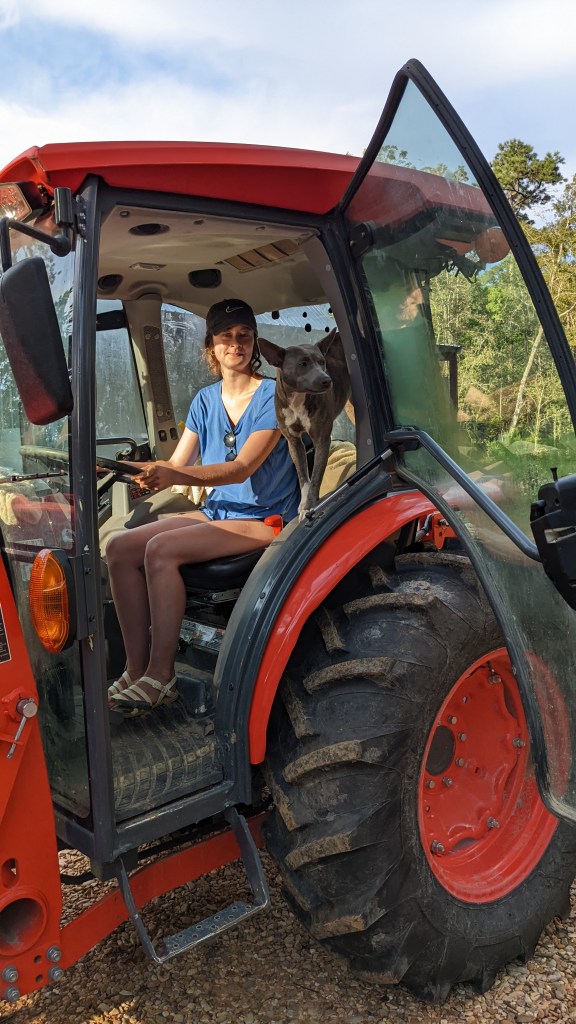
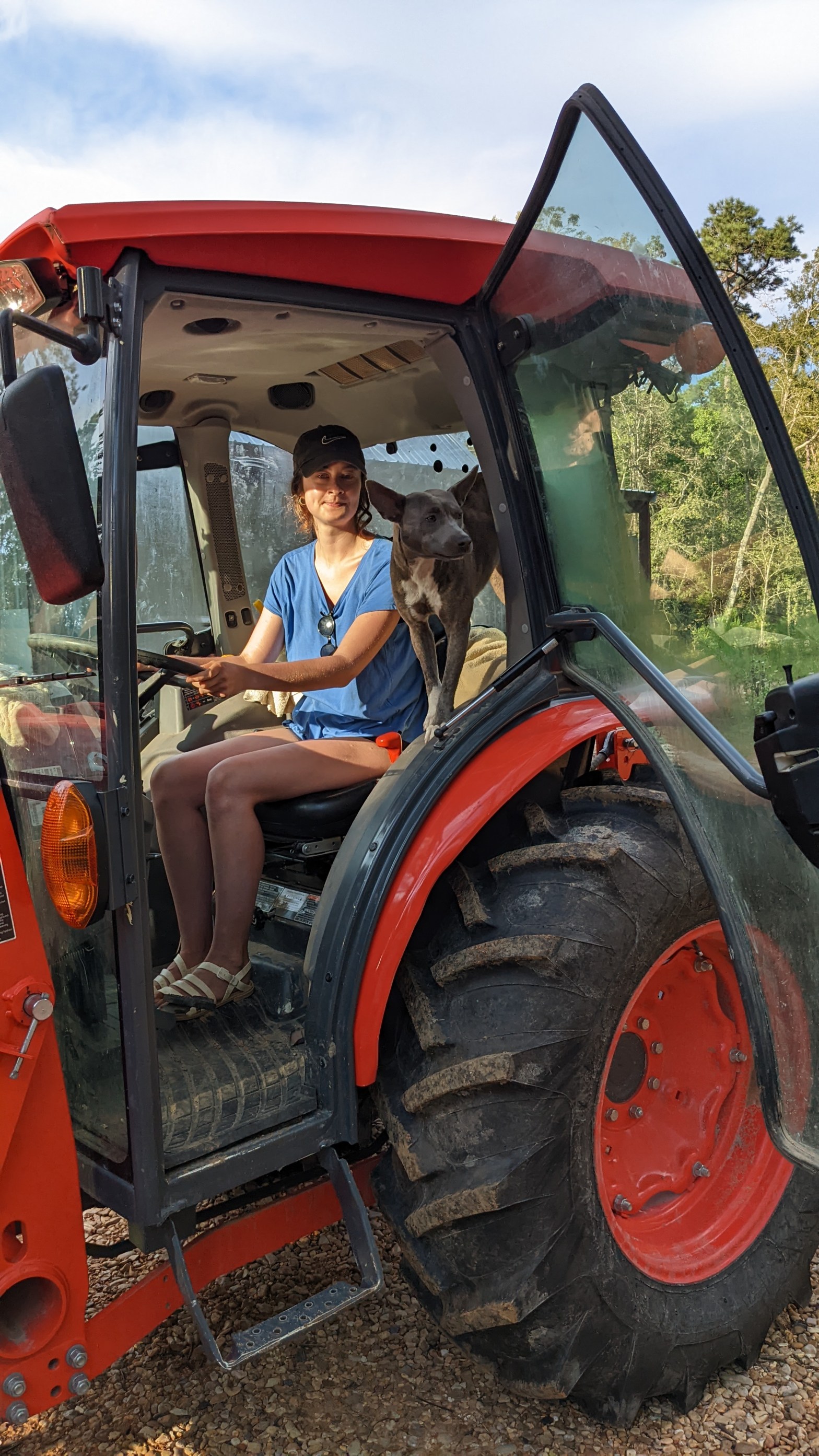
Louis driving the tractor in style, with Nettles acting as copilot.

A successful business requires vision, passion, hard work, and creative approaches to challenges. The help we get from our WWOOF guests is one example of finding a creative solution for a farm pro

January 2nd: Hangry and armed with a Stinger

“The bee is domesticated but not tamed.” ~ William Longgood

A week and a half ago I put out a feeder to see if the bees were hungry.

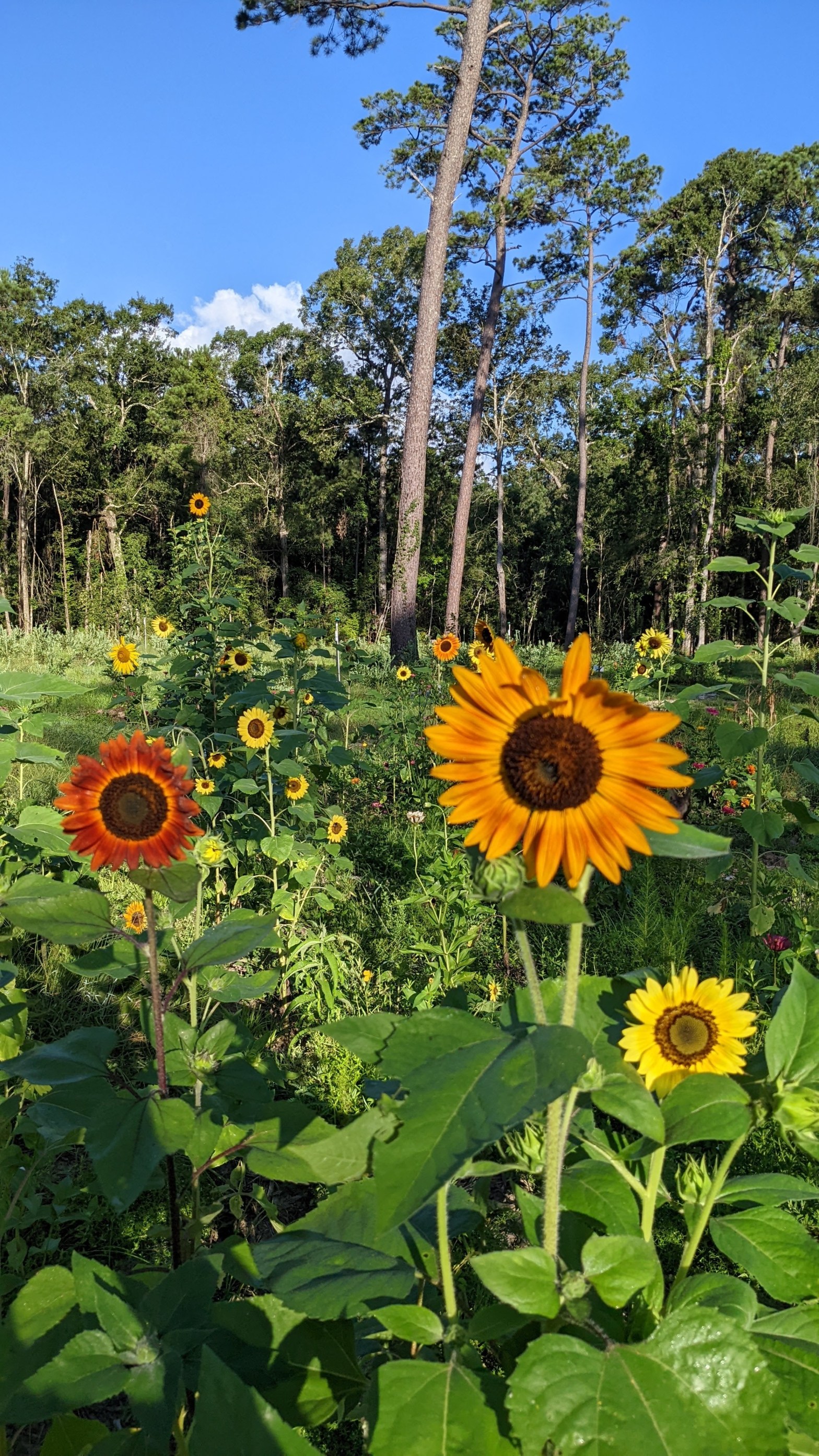
Also a week and a half ago the Gulf Coast hadn’t plunged into sub-freezing temps. Though a lesser version of their summer splendor, flowers were still blooming in abundance. Zinnias, alyssum, cleome, and flamingo celosia could be found in every clearing on the farm. The tropical milkweed, which had been cut down to encourage Monarchs to fly south, had reappeared with surprising vigor and was covered in mopheads of orange flowers. Wildflowers, such as violets, Indian blanket, and railroad coreopsis were plentiful along with narrow-leaf sunflowers and some stalwart goldenrod which still bloomed along the Trace, a 30+ mile Rails to Trails path that transverses the northern half of the Apiary. And in the middle of our vegetable garden was the biggest pollinator magnate of them all–a Tithonia that had grown so tall that it fell over and then continued to grow until it became a huge, flower-covered meet-up for late-season pollinators. Ergo there were no takers for my second-rate bee meal.

Every beekeeper has a preferred feed for their bees. A room of 20 beekeepers will have 30 experts and 40 recipes for what to feed bees. My recipe is a mix of sugar and water in roughly equal parts with a few drops of lemongrass oil thrown in. Lemongrass oil mimics the pheromones of a queen and bees are drawn to it.

I suggest you not wear lotions or moisturizers containing lemongrass when preparing to be around bees. I speak from experience.

When the cold spell hit anything that didn’t die went dormant. Then it warmed, the bees came out to forage, and there wasn’t anything to eat. When you walked near the hives they would interrogate you to see if you were a flower. If you got very close they would bomb you–hitting you hard enough that you feelt them but not committing to stinging you. They were hungry and testy so I put out the feeder again and within half an hour it was a seething mass of feeding bees.

Bees work very hard on two things. They grow and divide to make new colonies, and they hoard honey like their lives depend on it because, in fact, their lives do. Bees maintain the same body temperature as humans which takes a lot of calories, especially in the winter. A healthy hive usually has no problem making enough to see them through the lean months, but domestic bees have to share their harvest with a beekeeper. Take too much and you will kill your bees. To make sure they won’t die of starvation we take very little in the fall, and we feed them until their interest turns again to flowers.

So, today’s chore list looked something like this:
1. Tend chickens which includes the usual checking of feed levels, making sure the automatic waterer is working, and collecting eggs. It also includes tending to about 35 out-of-season hatchlings living in the barn. More on that debacle later.
2. Finish planting what now seems a truly endless flat of bunching onions.
3. Clean and stack unused hive boxes in the loft. These have been inventoried and sorted to ensure we have enough of what we need to split hives when the time comes.
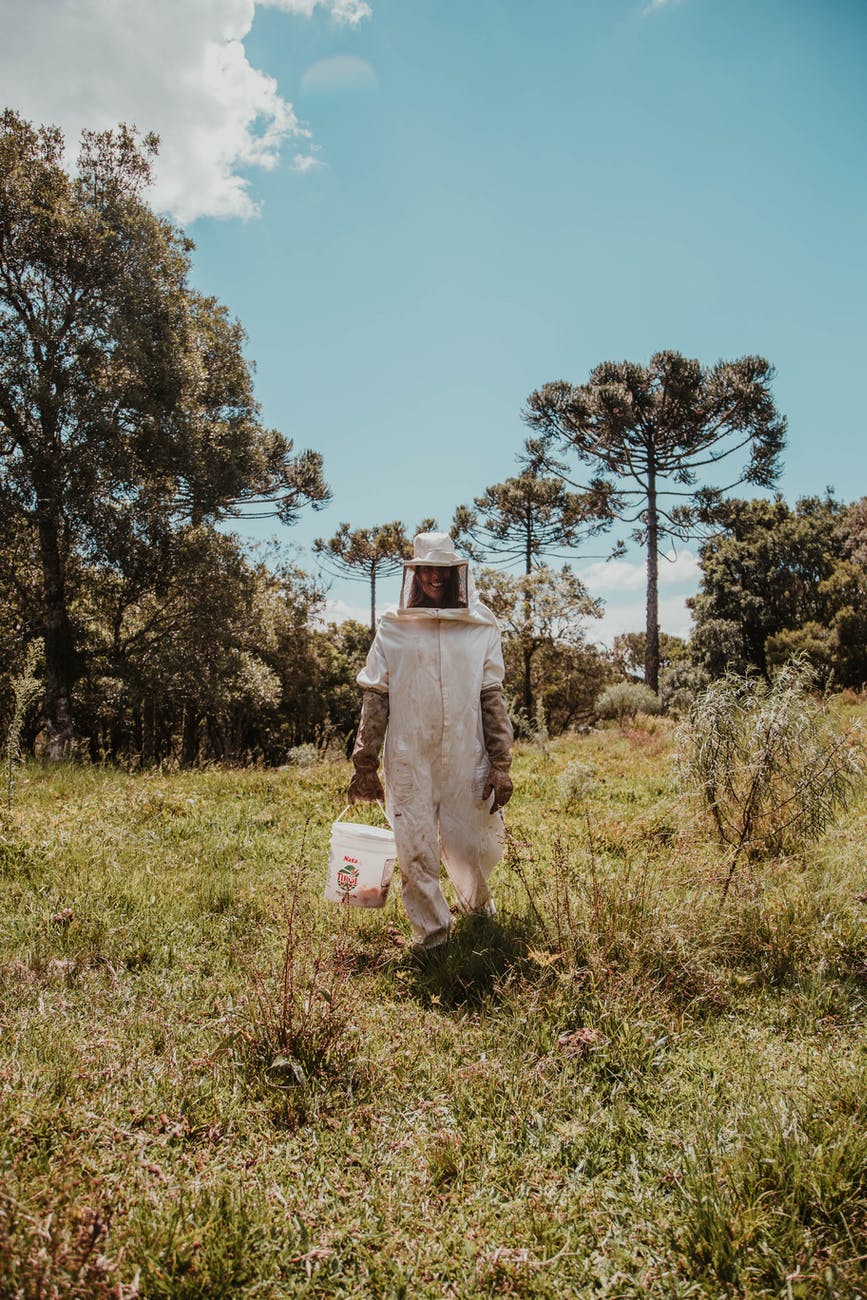
4. Feed bees. But do it in a bee suit because those rascals are more than a little grumpy right now.
5. Make the traditional New Year’s day meal which MUST include black eye peas, cabbage, and ham so that you will have health, wealth, and good luck in the coming year. Don’t test fate–git to it if you haven’t.

We feed using food-grade three-gallon pails because I can wrangle a three-gallon pail a lot easier than a five or six-gallon pail. The bees are consuming almost two of these a day. We’ll continue to put food out for them until they lose interest. When that happens depends a lot on what is blooming within their foraging range. One of the first spring food sources is red maple, so when you see the red of new maple leaves on the trees the bees are not far behind.

January 1st: Have a Plan

“You will either step forward into growth, or you will step backward into safety.” ~ Abraham Maslow

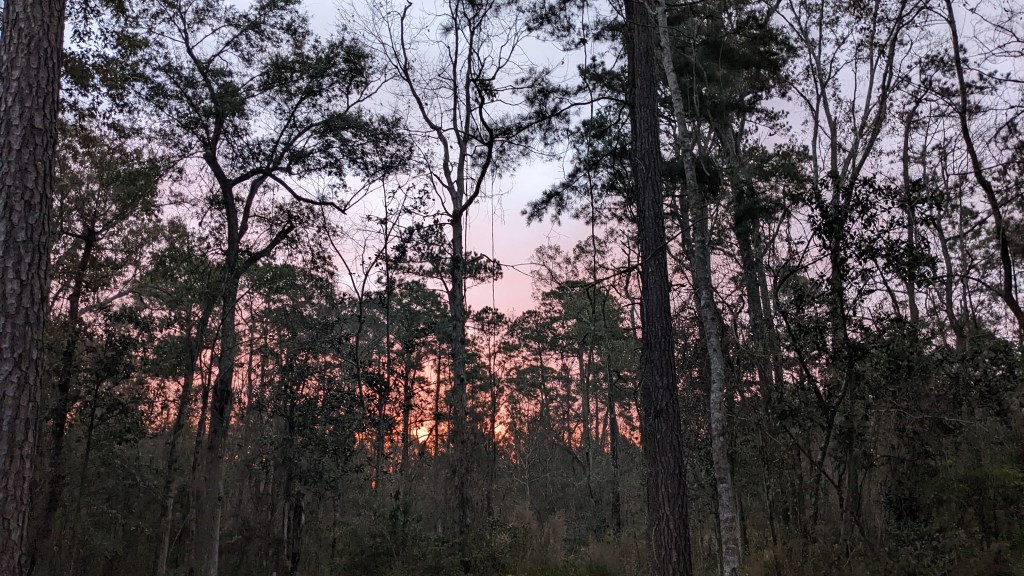
In 2020 my husband and I purchased what would become Big Branch Apiary, roughly 46 acres of dense, ancient forest nestled against a wildlife refuge an hour’s drive north from New Orleans.

Within two years of purchasing the Apiary we had sold a spacious house in New Orleans, moved our marriage and three dogs into a tiny RV, and rolled through over $600,000 in pursuit of a dream. Some people said we made a mistake, some said we were too old, and some people got it. That is all irrelevant. Going into the third year we have no buyer’s remorse. We are both healthier than two years ago. We still plan, scheme, and discuss the projects on the farm with enthusiasm, and we look forward to eventually designing our home without hating our current situation. There is something intoxicating about having purpose and purpose is worth sacrificing for.

Big projects are made up of small parts and today’s parts include planting out some bunching onions and artichokes. Yesterday it was large-leaf spinach, purported to do well in winter, and mixed lettuce greens. The garden isn’t going to plant itself so sowing future meals is a priority.

One of the most important things I’ll do today is to review my one, five, and 10-year plans. I do it quarterly and it’s something I’ve done for decades. Reviewing my plans–goals that support what I deem my purpose–keeps me focused and constantly assessing where I expend energy. If you read yesterday’s post you probably surmised that I love a list. This love was reinforced by a study I came across in my 20s about the difference in success between those who write down goals and those who do not.

Is it the writing down that creates success, or do those who succeed tend to write things down? I don’t know but I am the champion of forgetting, even the really important things, so I list my goals and the steps needed to achieve them so they don’t get misplaced in a dusty corner of my mind. You can find a great article on the psychology of writing down your goals here.

What does this have to do with a year in the life of Big Branch Apiary? The Apiary became a goal on my list. And now things like finishing the Primordial Tea Room (our name for the greenhouse) and making the chickens more profitable, are on the list.

What are some of your goals? It might be a goal related to health or having a certain GPA. Maybe you want to strengthen friendships or go on an epic adventure. Whatever it is, write it down. Then write down the steps needed to get you there. And finally, share it. Share it with friends, on social media, or here in the comments–sharing your goal with others is another way to help ensure they are more likely to happen.

For now my goal is to get these onions in the ground. I wrote it down, I told you about it, and now it’s go-time in the garden.

Don’t waste another moment. Step towards your dreams if you are lucky enough to have them.

Sunrise over the blueberry fields at Big Branch Apiary.

December 31st: closure & reflection

“Nature, to be commanded, must be obeyed.”   ~Francis Bacon

There is a rhythm, a reliable cycle to life and I believe that nowhere is it more apparent than it is on a farm. And though Nature sometimes acts up–like last week’s temperatures that bounced around the low 20s and mid-30s for days; like a rain that settles in when your schedule says “Time to spray dormant oil;” or like the late cold-snap that catches your fruit trees with their bloomers exposed–Nature is confined to buck and writhe within the bounds of the cycles that we all abide by. And because of this mostly reliable cycle there is the repeated list of duties undertaken in roughly the same sequence each year. January to get seeds started indoors. May to harvest honey. June to pick blueberries. It’s the same every year within a few days or a week at most. There is little room for procrastination. I speak from experience. You work with Nature or she marches on without you.

It can be hard to keep up. You feel like you just pruned those roses, yet here it is time to do it again. I make lists on my calendar to keep me on schedule. Sometimes I borrow lists from other sources–a favorite of mine is the Louisiana State University Ag Center’s list on what to plant by month. I have reminders on when to add light to the coop to keep the hens laying, when to start thinking about splitting the hives, and when to get the tractor serviced. I’m forgetful, easily distracted, and I love lists.

This is the last day of 2022. My chore list is rote, a typical end-of-month to-do, nothing special to show it is the last list for the year: caring for hens, collecting eggs, repairing a few freeze-damaged irrigation lines.

And don’t forget tending the books. Running a farm is not just planting stuff and petting baby animals. There’s marketing, budgeting, human resources, field surgery, wrenching, lots of other stuff, and there is accounting. Our farm books are up-to-date and tax-ready so they don’t leach the joy from life over the holidays. Accounting, more than any other is a task that grows daunting faster than Kudzu if left to languish, and will become a snowballing quagmire of time if allowed to bleed into the next year. How do you eat an elephant? One bite at a time. I apply this philosophy to the farm accounting.

But tomorrow we flip our calendars to a new year. The cycle of life will repeat as expected, yet the wonder remains. There is magic each time seed becomes plant, caterpillar becomes butterfly, or egg becomes chick. You can work to invite the magic, to bring the crop to harvest, but the magic is always completed on Nature’s schedule, and by Nature’s rules.

I intend to capture my journey on the farm over the next year, to show the ups and downs, challenges and joys, seedy day by seedy day. I hope you’ll join me on the journey.

One of the last batches of eggs gathered in 2022. Big Tom & Nettles are hoping for one to drop.

Open , but by “appointment”

The blueberry season was a bit short, likely due to the heat but we still have lots of local honey and plenty of fresh eggs.

Someone is usually at the farm but before you make the drive, check in just in case we’re not manned. You can call or text 985-422-0880 to make arrangements for a visit. While you’re here check out the butterflies which have been visiting in droves, or pick a bouquet of zinnias or sunflowers to bring a bit of nature home with you.

We’re open…

…in spite of the heat, rain, deer flies, & state “bird” we’re open every Tuesday & Saturday, or by appointment, until the blueberry harvest is done. Right now the bushes are LOADED!

We also have eggs, and honey–raw, local, pure–pulled from the hives this week.

See you on the farm!

Open 4 Biz!

Big Branch Apiary will finally open for picking this Saturday, June 4th, 2022.

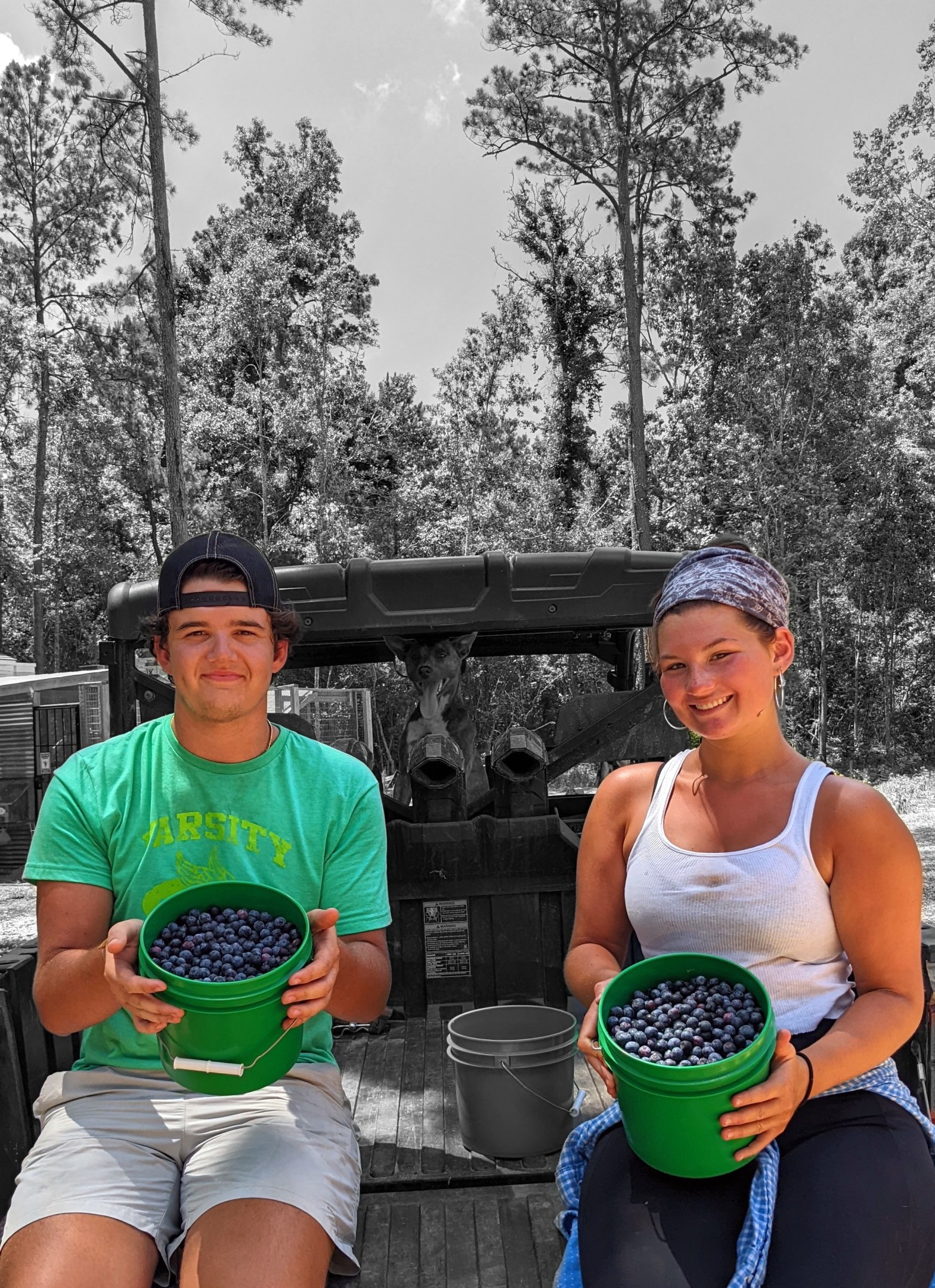
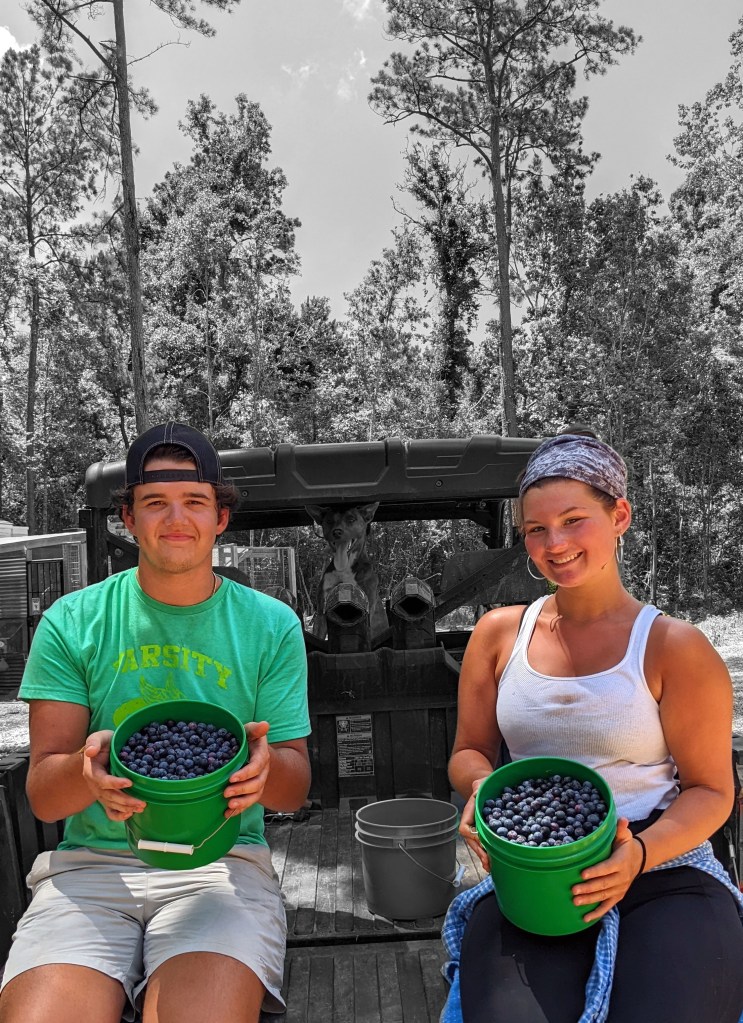
Today we picked blueberries in real quantities. It took three of us an hour to pick two gallons.

Parker, Nettles (trying to photobomb from the passenger seat), and Olivia showing off today’s harvest.

Advertised hours have changed: we’ll open 7:00 AM – 4:00 PM Saturdays & Tuesdays. It’s highly recommended you call or text us at 985-422-0880 before you drive up in case the berries are picked clean. Again, phone # is 985-422-0880.

Honey harvest is underway. We’ll have it for sale until it runs out. Fresh eggs are always available.

Berries are $5 for as many as you can get in a pint clamshell (which we supply), honey $8 a pint jar (w/honeycome $10 a pint), eggs $5 dz. For those interested in okra, it will be available in a few weeks. As payment, we accept PayPal, Venmo, credit cards, checks, the always-fashionable cash, and small children as long as they know how to run a tractor.

The blueberry bushes are young, ergo small, so harvesting two gallons means you will walk the entire field and see flames coming off your fitness tracker. We have buckets but you can bring your own if you want. If you come out we recommend long sleeves, a hat, water, mosquito spray, & for goodness’ sake, no sandals!

Hope to see you soon.